

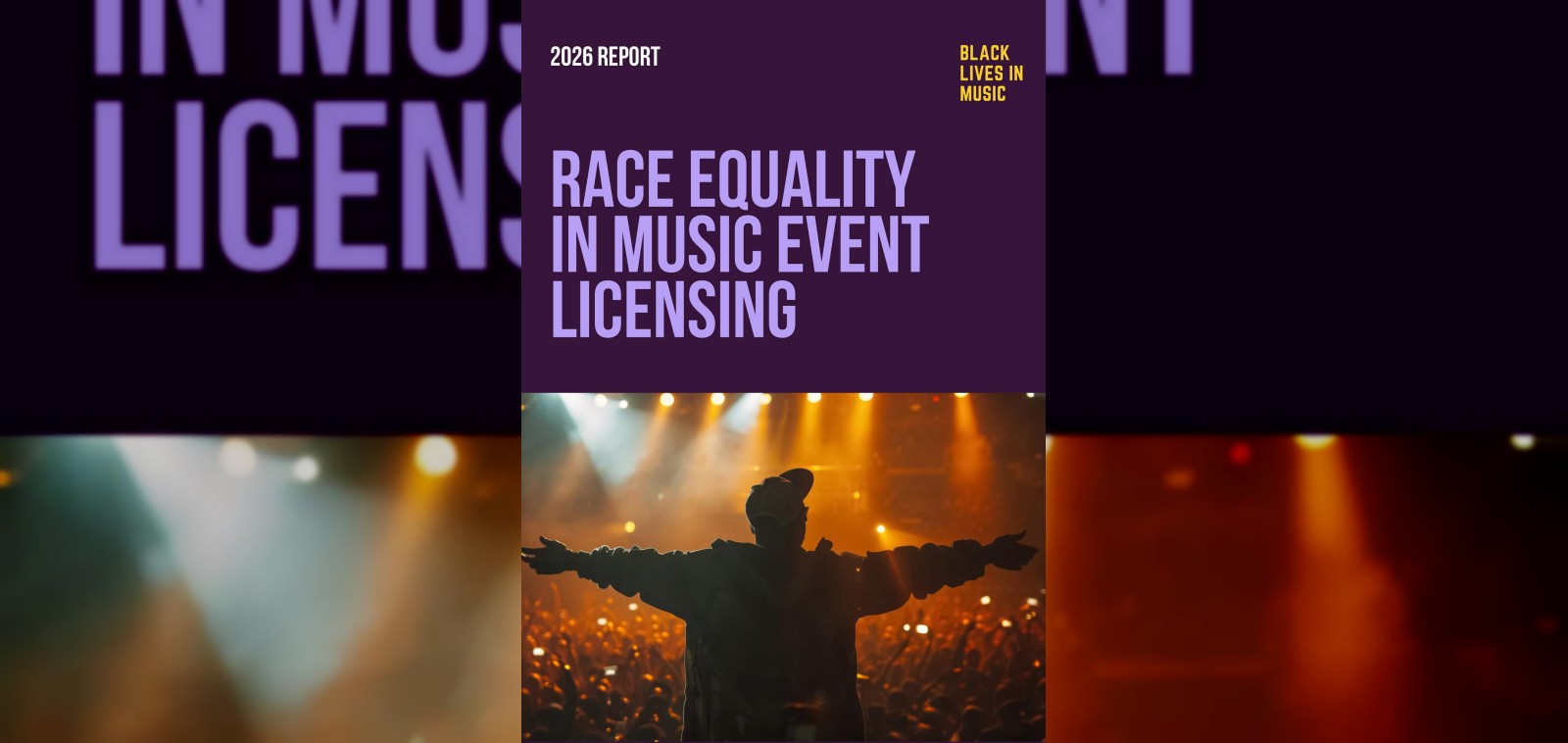
The REMEL report, published on October 14 by the UK charity Black Lives in Music (BLiM), concludes that music events led by Black and South Asian promoters in London are cancelled, restricted and shut down at higher rates than comparable events led by white promoters. The two year study puts the cost to the capital’s live music economy at an estimated £127m to £141m in lost spending every year, and more than £650m over five years.
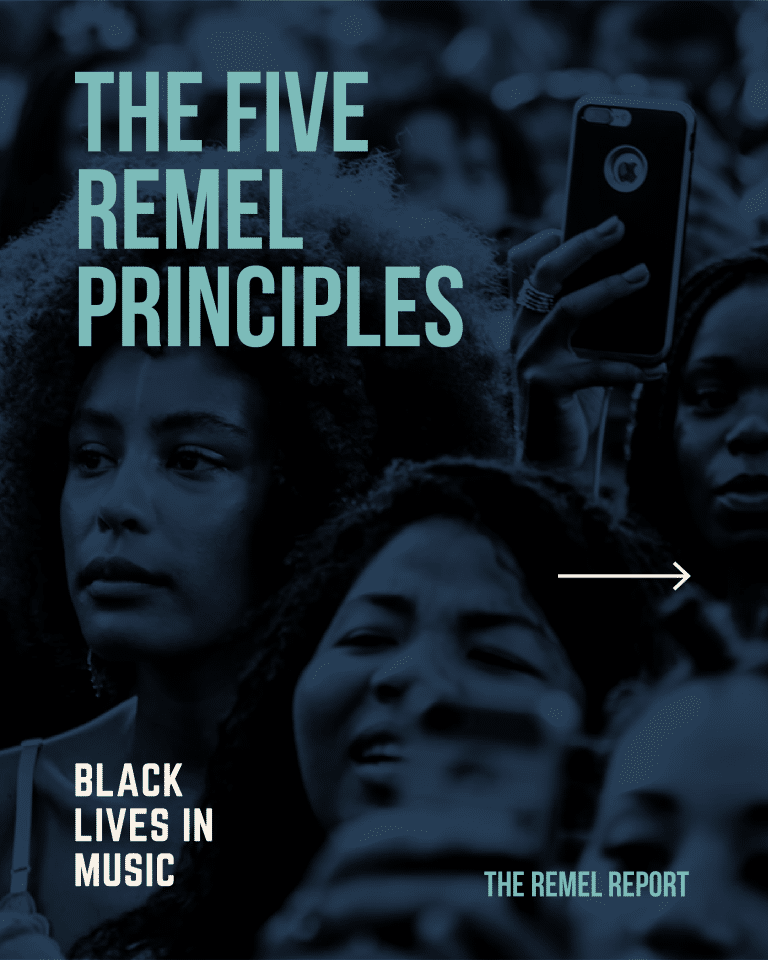
REMEL stands for Race Equality in Music Event Licensing. Its message is printed on the cover in four words: Culture Is Not a Risk.
What the REMEL Report Found
The 140 page report was built from surveys, interviews, focus groups, workshops, Freedom of Information requests and licensing data. Resident Advisor reports that the qualitative side drew on interviews and focus groups with 34 industry professionals. The project was overseen by a steering group that included the Greater London Authority, the Metropolitan Police, UK Music, LIVE and the Musicians’ Union, alongside promoters, artists, venue operators and community representatives.
The headline findings, as set out by BLiM and confirmed in coverage by Music Week, Rolling Stone UK and the Press Association:
- Events led by Black and South Asian promoters face more cancellations, restrictions and police objections than white led events of a similar size, often with little explanation and no clear route to appeal.
- Temporary Event Notices are refused more often in London’s most ethnically diverse boroughs.
- In 46% of the police affected cases the report examined, the venue ended up closing entirely.
- Three in four promoters reported direct losses from cancellations, averaging around £5,000 per event.
- After incidents, white owned venues were more often supported back into business, while Black owned venues were more likely to be forced to close.
- Crime statistics covering a whole area were used to justify restrictions on individual venues, even where those venues had clean safety records.
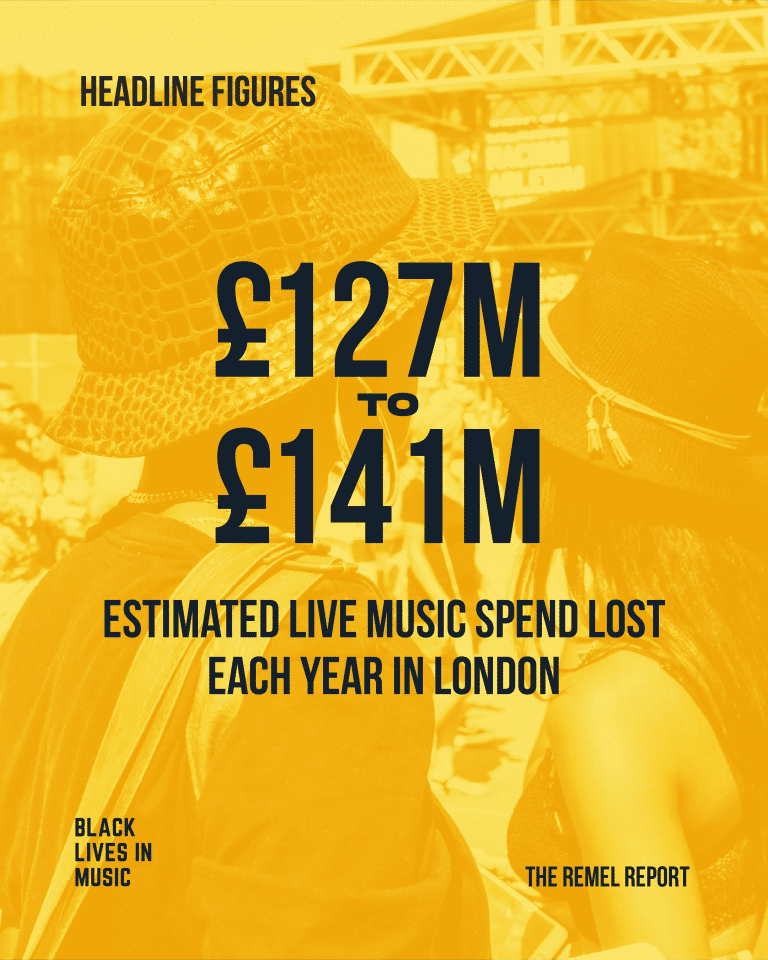
A note on the numbers: the report’s own published range is £127m to £141m a year, the figure used by BLiM, Music Week, Rolling Stone UK and Resident Advisor. At least one early write up cited a lower annual figure; housemusic.us is using the range published by the report’s authors.
Genre Profiling and the Long Shadow of Form 696
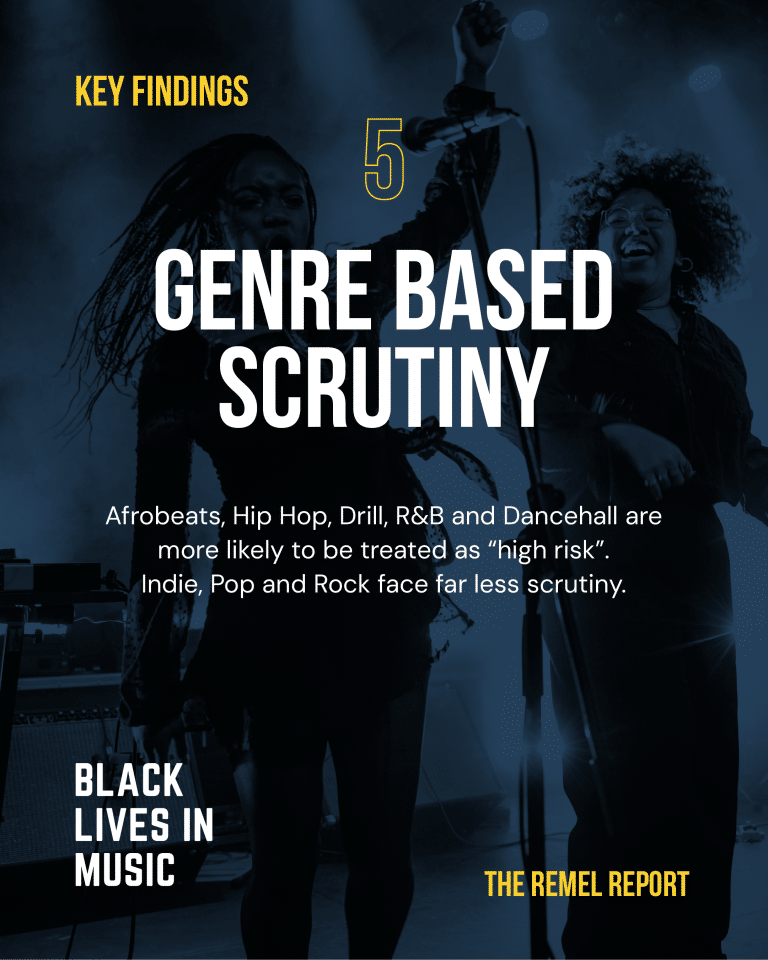
One of the sharpest findings concerns genre. According to the report, events built around Afrobeats, hip hop, drill, R&B and dancehall are routinely flagged as high risk, while indie, pop and rock nights draw little scrutiny. The authors argue that this is less about explicit bans and more about routine processes that reproduce the same outcomes.
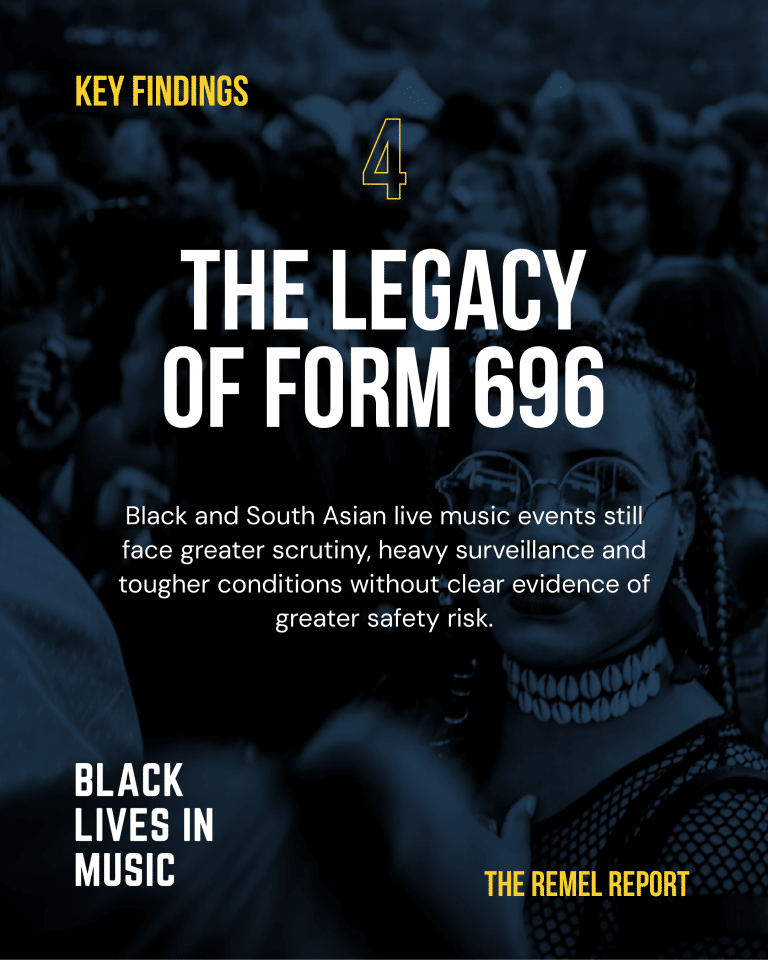
That echoes Form 696, the Metropolitan Police risk assessment introduced in 2005 that asked promoters about the music and audience at their events. It was widely criticised for targeting Black music, grime in particular, and was scrapped in 2017. REMEL says its legacy still shapes how risk is judged today. Some respondents also described informal, off the record pressure from police, including hints at future licence reviews.
One contributor quoted in the report, Gareth Hughes, summed up the concern bluntly: “Sometimes it is just based on a Google search. That is not intelligence. That is assumption turned into regulation.”
Why It Matters for Dance Music
The genres named in the report are not house or techno, but the system it describes is the same one every London club night has to pass through. The report cites the case of the Colour Factory in Hackney Wick, which lost £55,000 after police suspended its licence following an incident outside the venue after hours. It also cites a promoter who was charged £10,000 for police attendance at a show with no history of trouble.
There is also a historical thread. House music was born from Black, Latino and queer club culture, a story we traced in The Roots of House Music, and Britain has a long record of legislating against the dancefloor, as covered in our look at how The Prodigy answered the 1994 rave ban. UK Music’s Black Music Means Business research, cited alongside the report, estimates that Black music genres account for £24.5bn of the UK’s £30bn recorded music market over the past 30 years.
What the Industry Is Saying
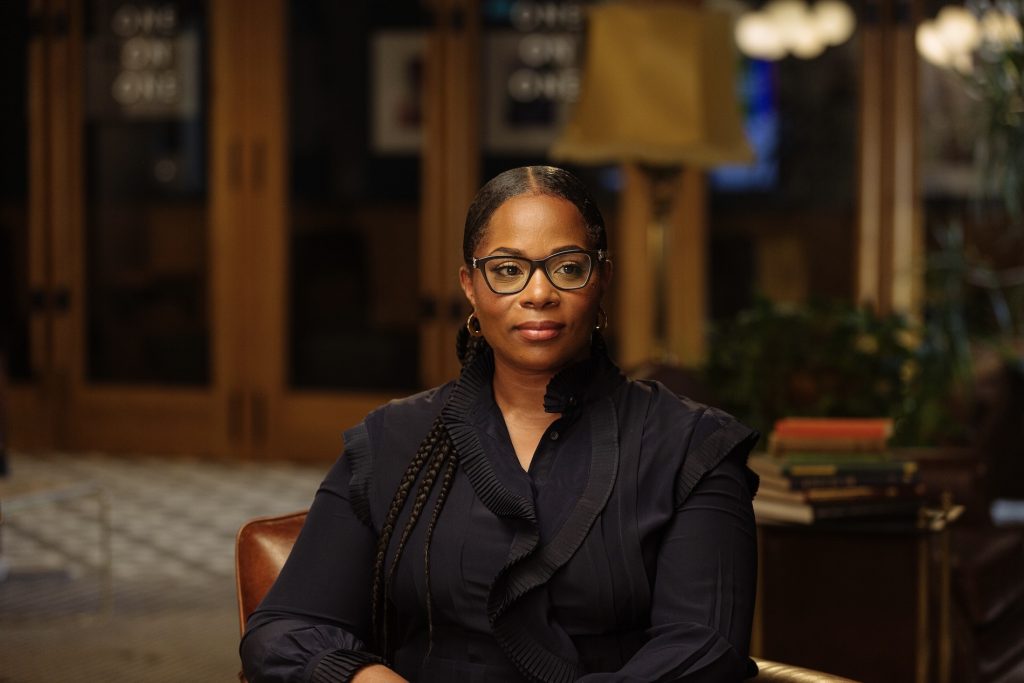
BLiM chief executive Dr Charisse Beaumont framed the report as an economic argument as much as a moral one. “Culture is not a risk. Culture is an economic asset,” she said, as reported by Music Week, adding that “Licensing doesn’t just affect a few artists or a handful of events.”
The wider trade bodies lined up behind it. Mark Davyd, CEO of Music Venue Trust, called it “the most important piece of research on barriers to culture that the live music sector has been handed in years.” Jon Collins, CEO of LIVE, said it shows how “a skewed perception of risk leads to over policing.” UK Music chief executive Tom Kiehl said “No individual, community or venue should ever be racially profiled,” and Michael Kill of the Night Time Industries Association warned: “When perceptions of risk replace evidence, we do more than restrict events.”
The Metropolitan Police, which sat on the steering group, gave a more measured response. Commander Neerav Patel said the force would “carefully consider the report’s findings,” according to Rolling Stone UK. The Met has not yet said which recommendations, if any, it will adopt.
What Happens Next
The report makes 19 recommendations. Among the most significant:
- An independent review of venue and event licensing, with a panel appointed by the Home Office and the Greater London Authority.
- Equality and human rights duties written into licensing law, including a ban on racial and genre profiling.
- Annual publication of licensing decision data by local authorities, monitored independently.
- An affordable appeals route and fairer rules for Temporary Event Notices.
- A Cultural Events Relief Fund plus targeted loans and micro grants for small operators.
Beaumont has urged government to work with the London Nightlife Taskforce to put the recommendations into practice. None of them is binding yet, and no timeline for adoption has been announced. The full report, executive summary and case studies are free to download from Black Lives in Music.
The REMEL report gives promoters something they have long lacked: hard numbers behind a complaint the scene has voiced for two decades. Whether London’s licensing system changes now depends on the councils, police and City Hall bodies that now have the evidence in front of them.
FAQ: The REMEL Report
What is the REMEL report?
REMEL stands for Race Equality in Music Event Licensing. It is a two year study, published by Black Lives in Music on October 14, 2026, into how licensing, regulation and policing affect Black and South Asian music events in London.
How much does licensing bias cost London, according to the report?
The report estimates £127m to £141m in lost live music spending each year, and more than £650m over five years.
Which genres does the report say are treated as high risk?
Afrobeats, hip hop, drill, R&B and dancehall, while indie, pop and rock events face comparatively little scrutiny.
What was Form 696?
A Metropolitan Police risk assessment form introduced in 2005 that asked promoters about the music and audience at their events. It was criticised as discriminatory against Black music and scrapped in 2017.
Are the recommendations binding?
No. The 19 recommendations are proposals. The Met says it will consider the findings, and campaigners want the London Nightlife Taskforce to help enforce them.