
The roots of house music are not in a studio or a software update. They are in a handful of rooms in Chicago at the end of the 1970s, where Black, Latino and gay dancers who were unwelcome in the city’s mainstream clubs built a scene of their own. The music that came out of those nights now fills stadiums, but the reason it exists at all is the people who needed somewhere to go.
The Warehouse and the room that named a genre
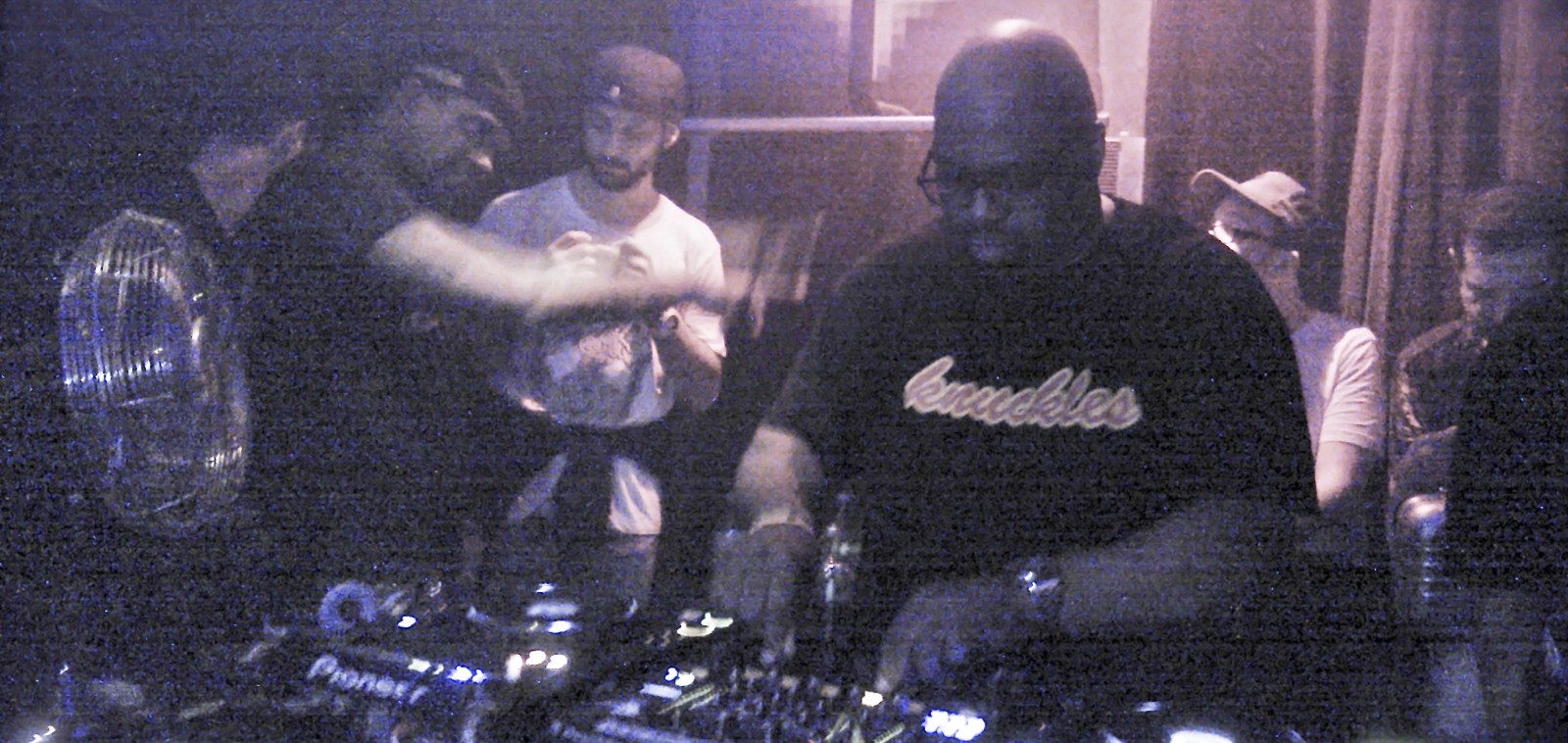
In 1977 a members club called the Warehouse opened at 206 South Jefferson Street in Chicago’s West Loop, run by Robert “Robbie” Williams. Its crowd was mostly gay Black and Latino men, and its resident DJ was a young New Yorker named Frankie Knuckles, who moved west that year to take the job. He played there until November 1982, when the club doubled its admission price and he left to open his own space, the Power Plant.
The Warehouse gave the sound its name. Record stores in Chicago started labelling the tracks Knuckles played as “Warehouse music”, and the tag was soon cut down to “house”. Williams had already been promoting his events as house parties, so the word stuck from both directions.
The building still stands. In June 2023 Chicago’s City Council designated it an official city landmark, a few months after Preservation Chicago had listed it among the most endangered sites in town.
Disco never died, it went underground
House did not appear from nothing. Knuckles came up in New York alongside his teenage friend Larry Levan, and both played the Continental Baths and the Gallery before Levan went on to build the Paradise Garage. Those rooms ran on disco, soul, funk and Philadelphia strings, stretched out and reedited for dancers who wanted to stay on the floor for hours.
When the commercial disco market collapsed at the end of the 1970s, that music did not disappear in clubs like the Warehouse. Knuckles kept playing it, extending breaks with tape edits and reel to reel machines, and layering in drum machine patterns and European electronic records. What he and his peers were assembling night after night became the template for house.
Black, Latino and queer: who built the roots of house music
It matters who was in those rooms. Chicago in the late 1970s was a deeply segregated city, and the “Disco Demolition” backlash of 1979 made clear how much of the mainstream resented music associated with Black and gay audiences. Clubs like the Warehouse, and later Ron Hardy’s Music Box, were places where those dancers set the rules. Writer Simon Reynolds has described the early scene simply as a gay, Black Chicago house scene.
Latino Chicago was part of that story from the start. The music drew on Hispanic dance traditions as well as Black American ones, and Latino DJs and producers were central to spreading it. Ralphi Rosario was one of the Hot Mix 5, the WBMX radio team that broadcast mixes across the city from 1981, alongside Farley “Jackmaster” Funk. And one of the defining early records, Jamie Principle’s “Your Love”, circulated first as a dub that Knuckles played for about a year at the Warehouse before it was finally pressed in 1987.
From dancefloor to record shelf
For a few years the music only existed on reels, edits and DJ mixes. That changed in 1984, when Jesse Saunders and Vince Lawrence released “On and On”, widely cited as the first house record. Cheap drum machines and synths such as the Roland TR 808 and TB 303 let local kids make tracks in their bedrooms, and labels like Trax and DJ International pressed them up for the clubs and the radio.
The dancers still decided what worked. Ron Hardy famously tested new records on the Music Box crowd, playing Phuture’s “Acid Tracks” several times in a single night until the room came around. Radio did the rest: the Hot Mix 5 reached listeners in every part of the city, far beyond the reach of any single club.
How the sound travelled, and what it kept
By 1986 Chicago house was charting in Britain. Farley “Jackmaster” Funk and Jesse Saunders reached the UK top ten with “Love Can’t Turn Around”, and in 1987 Steve “Silk” Hurley’s “Jack Your Body” went to number one. Cheap compilations like the Jack Trax series put rare Chicago records into European shops, and a new generation of DJs, from Jazzy M onward, built a scene around them. That chain eventually led to the warehouses and fields covered in our story on how the UK built rave culture.
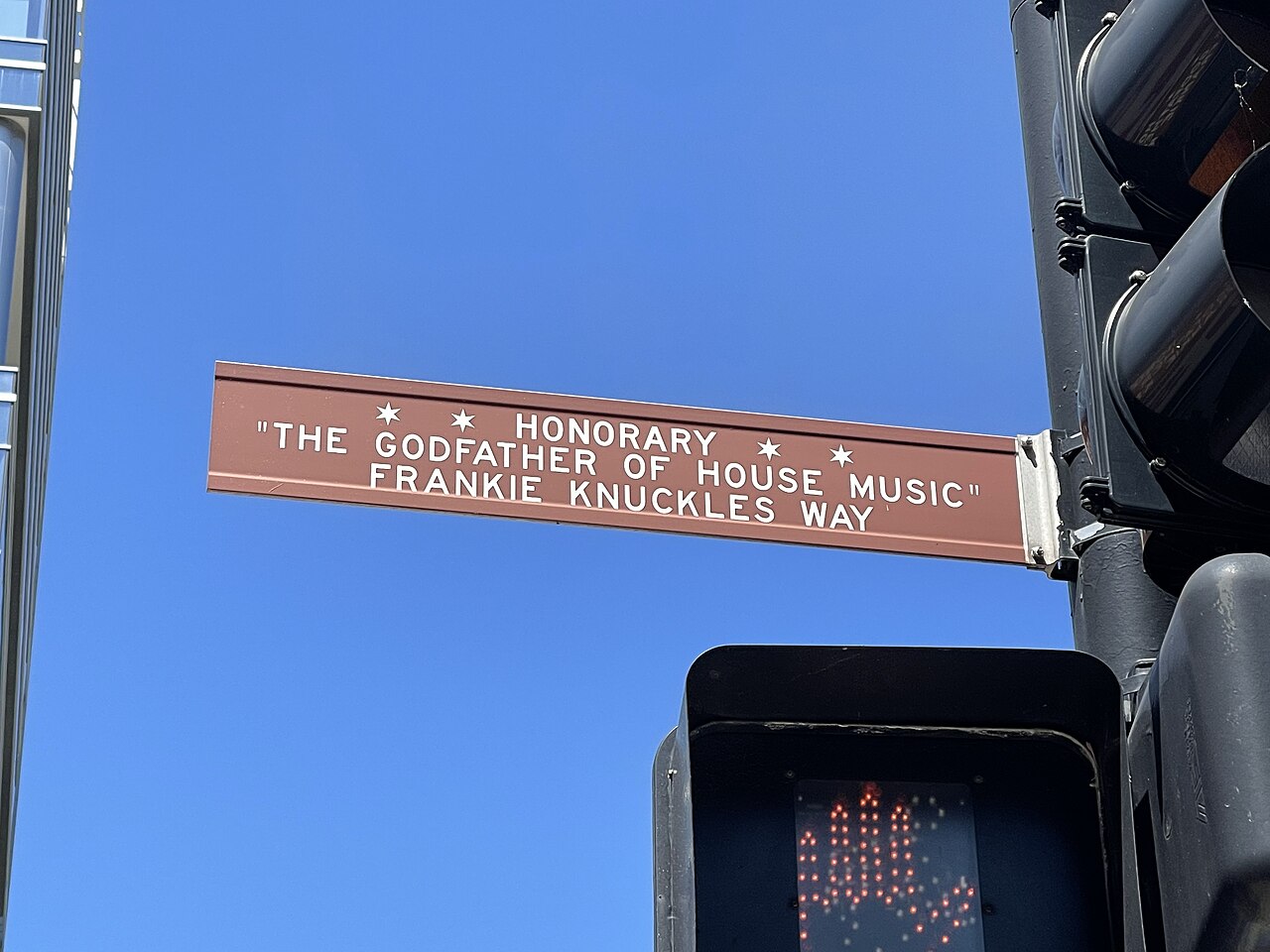
Chicago did not forget where it started. In 2004 the city renamed the stretch of Jefferson Street outside the old Warehouse as Frankie Knuckles Way, with help from a state senator named Barack Obama. Knuckles won the Grammy for Remixer of the Year in 1997 and died in Chicago on March 31, 2014, at 59.
Why the roots still matter
House is now a global business, and plenty of people dance to it without knowing any of this. But the core idea holds up: the scene was built as much by the people on the dancefloor as by the people behind the decks. The music was made for a specific crowd, in rooms where that crowd could be itself, and the best clubs still work the same way. For a deeper look at the venues that carried that spirit, see our guide to the places that defined house music.
Source: @housemusic.us on Instagram, with reporting from the City of Chicago landmark designation, Preservation Chicago and historical accounts of the Warehouse and the Hot Mix 5. Cover photo: Frankie Knuckles at ADE 2012 by deepstereo, CC BY 2.0.