


Baby raves have moved from niche curiosity to one of the fastest growing corners of the live electronic music business. New data from Eventbrite shows that listings for baby and toddler raves grew 93 percent year over year in 2025, while attendance at those events climbed 183 percent over the same period. The dancefloor has found a new demographic, and it arrives with glow sticks, ear defenders and a strict bedtime.
The figures come from britegeist, a data newsletter Eventbrite built around trends pulled from the roughly five million events listed on its platform each year. For a scene that spends most of its time arguing about ticket prices and club closures, this is one of the few growth charts pointing straight up.
What the Eventbrite numbers say about baby raves
Two numbers matter here. The 93 percent rise in listings shows supply, meaning promoters, venues and community organisers deciding there is a market worth booking for. The 183 percent jump in attendance shows demand, and it is the more telling of the pair. Listings can spike on speculation. Attendance only doubles when people actually turn up.
The events themselves are not a single format. Some are club style parties held in the early afternoon with a proper sound system dialled down to safe levels. Others run out of schools, parks and public libraries, with glow in the dark décor and age appropriate music for children up to five. The common thread is simple: a real DJ, a real dancefloor and a start time that respects a nap schedule.

Lenny Pearce turned nursery rhymes into toddler techno
Most of the attention around baby raves traces back to one name. Lenny Pearce, an Australian DJ and former member of the dance group Justice Crew, started remixing nursery rhymes for his own daughter. Versions of ‘Wheels on the Bus’ and ‘Head, Shoulders, Knees & Toes’ went up on TikTok, the account passed two million followers, and a private family joke turned into a genre with a name attached: toddler techno.
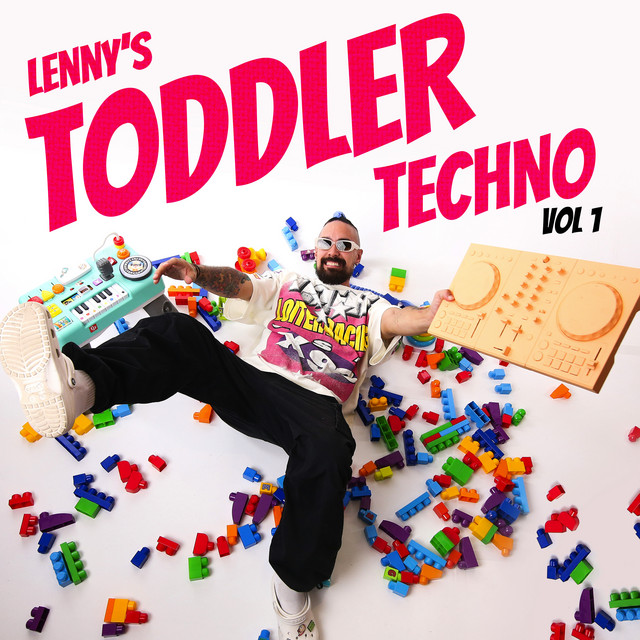
The music did not stay on social platforms. Pearce’s tracks landed on Spinnin’ Records, one of the most established dance labels in the world, and he signed a Disney development deal that produced a full remix album, Lenny’s Toddler Techno (Vol 1). The tracklist reads like a preschool playlist run through a club filter, with ‘Incy Wincy Spider’, ‘Old MacDonald’ and ‘Baby Beluga’ all rebuilt around a four to the floor kick.
From viral clips to a 42 date touring business
The clearest sign that this is more than a meme is the touring math. Pearce has moved more than 200,000 tickets across Australia, New Zealand, the United States, Canada, Asia, the Middle East and the United Kingdom. Those are numbers plenty of adult oriented touring acts would be happy to post.
His next run is bigger again. A 42 date North American tour, presented with Live Nation, launches on September 25 in Baltimore and continues across the United States and Canada into late November. The routing includes rooms that are not usually booked for the under five demographic: New York’s Hammerstein Ballroom, The Wiltern in Los Angeles, Brooklyn Bowl in Las Vegas and the Aon Grand Ballroom at Navy Pier in Chicago. Earlier this year he played Red Rocks Amphitheatre in Colorado, which remains one of the more surreal entries on any toddler techno résumé.
Why the format works for the parents too
Strip away the novelty and the logic is straightforward. A generation that grew up in rave culture is now raising small children, and the standard options for a family weekend rarely involve a sound system. Baby raves solve a scheduling problem and an identity problem at the same time. Parents get a few hours of music they actually like, in daylight, without booking a sitter or writing off the next morning.
There is also a reason the format lands so easily with children. Rhythm and movement reach a young brain across several systems at once, engaging hearing, motion, memory and reward together, which is one of the reasons researchers keep returning to music when they study early development. Our piece on music and children’s brain development covers what the science does and does not support. The wellbeing case for shared live music is reasonably well documented for adults too, and a room full of families moving in time is running on the same machinery.
What the baby raves boom signals for the scene
It would be easy to file this under harmless novelty and move on. The data suggests something more useful. Electronic music has spent years worrying about aging audiences, shrinking club capacity and a younger generation that drinks less and goes out later. A format that brings new listeners into a room with a DJ before they can read is not a threat to club culture. It is an early entry point into it.
There are limits worth naming. Eventbrite measures activity on its own platform, so the percentages describe a slice of the market rather than the whole thing, and a doubling from a small base is still a doubling from a small base. Growth this steep also tends to attract operators who care more about ticket volume than about hearing protection or crowd density, which is exactly the kind of thing that turns a good idea into a bad headline.
Even so, the direction is hard to argue with. A DJ remixing nursery rhymes for his daughter now fills ballrooms on two continents, and the listings data says hundreds of promoters have noticed. The next generation of ravers is already on the floor. It just needs to be home by six.
Eventbrite data via britegeist, as first reported by EDM.com. More data driven stories in our research coverage.