

A claim keeps going viral every festival season: that going to concerts can actually add years to your life. It sounds like wishful thinking from people who would rather be on a dancefloor than in a gym. So we looked at what the science really says about live music health benefits, and the picture is more interesting than the headline version.
The honest summary up front: a night out will not replace sleep, real food, or a doctor. But the research connecting gigs, festivals, and shared dancefloors to better mental and physical health is real, and some of it is genuinely surprising.
Live Music Health Benefits Start in the Brain
Music does something unusual to the human brain. It lights up regions tied to reward, emotion, movement, memory, and attention all at once, which is why a single track can move you, make you want to dance, and pull up a specific memory in the same second.
In 2011, researchers at McGill University led by Valorie Salimpoor published a landmark paper in Nature Neuroscience. Using brain imaging, they showed that listening to music you love triggers a release of dopamine, the same feel good chemical involved in food and other core rewards. It was the first hard evidence that an abstract pleasure like a song can hit the brain reward system the way tangible rewards do. The team even found that the build up and the peak chills moment light up different parts of the striatum, which is basically the science of why a long intro before the drop feels so good. If you want to go deeper, our piece on music and brain development looks at how sound shapes us from an early age.
A live set turns all of this up. The volume, the visuals, and the bass you feel in your chest add up to a full body version of the thing your brain already rewards you for.
Lower Stress and the Cortisol Effect
The benefits are not only in your head. They show up in your hormones too.
Researchers at the Centre for Performance Science in London measured cortisol, the body main stress hormone, in people attending live concerts. Using saliva samples taken before, during, and after the show, they found that cortisol levels dropped across the board. Lead researcher Daisy Fancourt described it as the first preliminary evidence that going to a cultural event can change activity in the endocrine system. The effect did not depend on age, musical training, or whether people even knew the music, which points to a response that is close to universal.
Singing along pulls its weight as well. Studies on group singing link it to lower cortisol and a rise in oxytocin, the bonding hormone, which may explain why a room full of strangers shouting the same chorus can feel weirdly emotional.
The Crowd Is Part of the Medicine
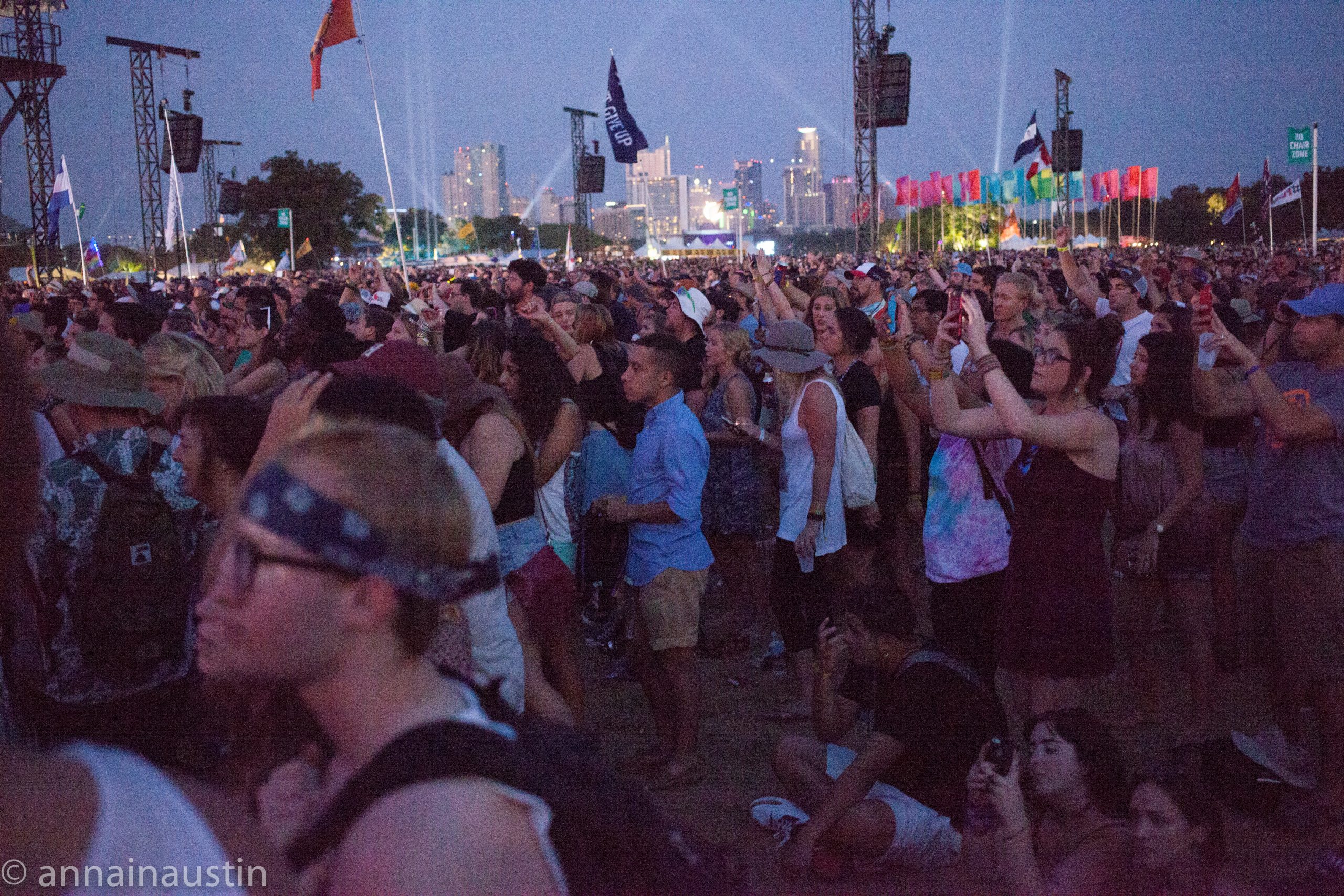
Part of the magic of a festival is not the music on its own. It is feeling it at the same time as thousands of other people.
Psychologists call that shared rush collective effervescence, a heightened sense of unity that comes from moving and feeling in sync with a crowd. Recent research found that the more festivalgoers felt that collective high, the happier they reported being, and the lift lasted for days after the event ended. Moving in time with others, whether dancing or singing, deepens social bonds and feeds back into the same dopamine loop. In a moment when loneliness is on the rise, a few hours of belonging to something bigger is not a small thing.

Can Live Music Really Help You Live Longer?
This is where the famous extra years headline comes from, and where it pays to read closely.
The strongest evidence comes from a 2019 study in The BMJ, led by Daisy Fancourt and Andrew Steptoe at University College London. Following 6,710 adults aged 50 and over for 14 years, they found that people who went to concerts, theatre, museums, and similar events every few months had a 31 percent lower risk of dying during the study period. Those who went once or twice a year still had a 14 percent lower risk. The link held even after accounting for wealth, health, and social factors. The researchers were careful to call it an association, not proof that the arts directly extend life.
The catchier nine extra years number traces back to a 2018 study commissioned by the mobile network O2 and led by behavioural scientist Patrick Fagan, then at Goldsmiths, University of London. It reported that twenty minutes at a gig lifted feelings of wellbeing by 21 percent, ahead of yoga and dog walking, then tied that to research linking high wellbeing to a longer life. It is a fun stat, but worth a pinch of salt: it was paid for by a company that sponsors music venues, it never went through peer review, and the nine years figure is an extrapolation rather than a measured result.
So the fair version is this. The idea that people who love live music might live a little longer has real support in the data. The exact number stamped on it does not.
So Is Your Next Festival Good for You?
Within reason, yes. The case for live music as a real wellbeing boost, lower stress, a flood of dopamine, and genuine social connection, rests on serious research rather than good vibes alone.
The usual caveats apply, and regulars know them well. Three days of little sleep, heavy drinking, and endless food queues are not exactly a longevity plan, and the shift toward a more sober kind of nightlife suggests a lot of fans already feel that. The healthy part is the music, the movement, and the people, not the hangover.
But the next time someone asks why you keep buying tickets, you have a bit of science on your side. Dancing in a crowd to music you love is doing more for you than it looks. Maybe your next festival really is good for your health.