

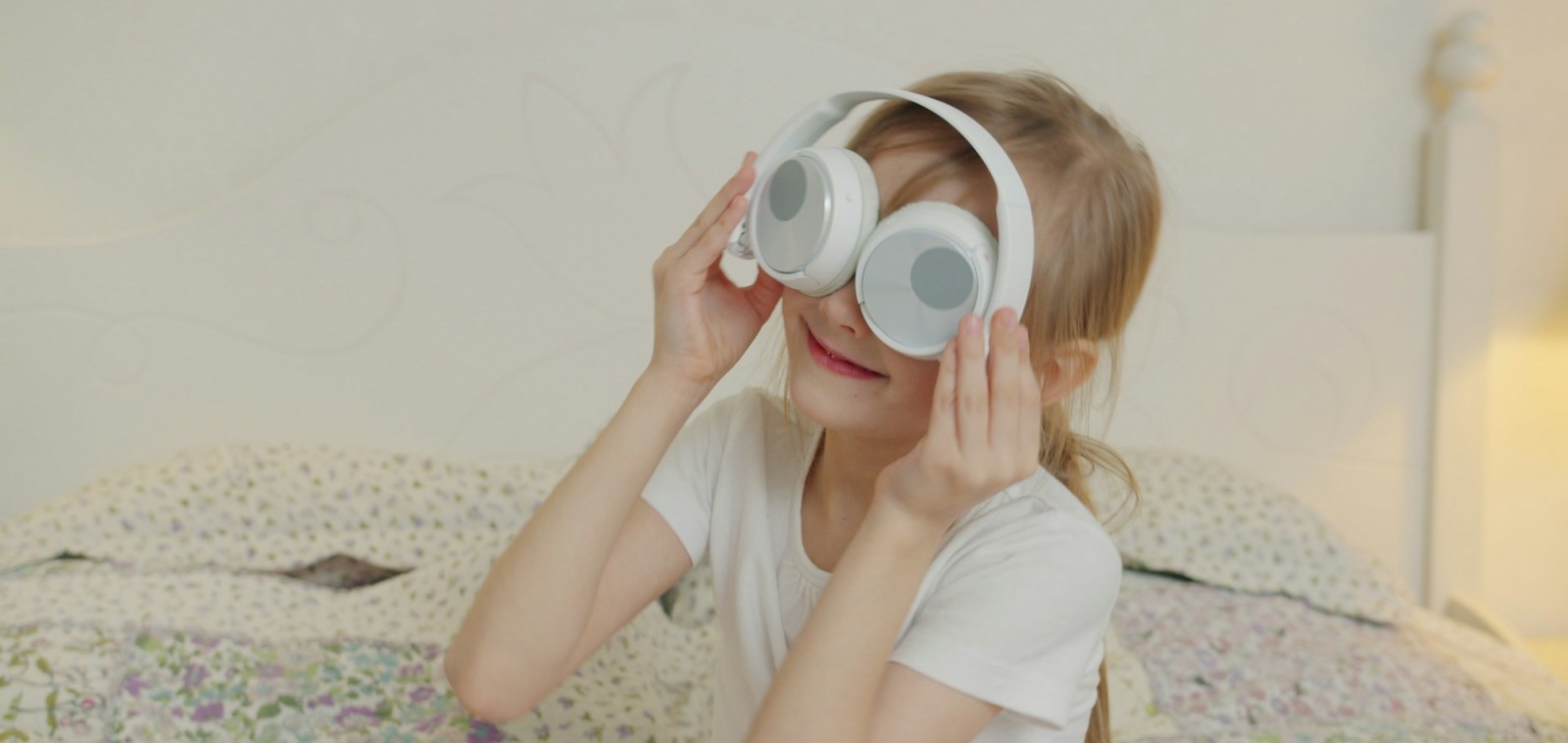
Put a pair of headphones on a toddler and watch what happens. The bouncing, the grinning, the total absorption in the sound. Parents have always sensed that music does something to a young child, and a growing stack of neuroscience now backs that instinct. Research on music and children’s brain development suggests that early exposure to sound and rhythm can shape how young brains wire themselves, from the bridges between the two hemispheres to the systems that handle attention, movement and reward.
The claim is not that music turns a kid into a genius. It is more interesting than that. Music seems to leave a physical mark on the developing brain, and the earlier it arrives, the deeper that mark tends to run.

A whole brain workout, not a single skill
Most activities lean on one system at a time. Music is different. A single song pulls in auditory processing, movement, memory, attention, language and emotion, all firing together. That simultaneous load is one reason scientists keep returning to music when they study how the brain grows.
For a child whose neural networks are still forming, that broad engagement matters. Instead of training one narrow ability, music asks the brain to coordinate listening, timing, motion and feeling in the same moment. The result is less like a single exercise and more like a full session for the developing mind.
What brain scans reveal in musically trained children
The most convincing evidence comes from studies that follow the same children over time. In a well known longitudinal study led by Krista Hyde, children who took about fifteen months of instrumental lessons showed measurable structural changes that the comparison group did not. Growth appeared in auditory and motor regions, and in the corpus callosum, the thick band of fibres that connects the left and right sides of the brain.
A separate long running project at the University of Southern California reached similar conclusions. Since 2012, neuroscientist Assal Habibi and the Brain and Creativity Institute have tracked children from underserved Los Angeles neighbourhoods who joined a free orchestral program. The children receiving music instruction developed stronger connectivity in the white matter pathways linking the hemispheres, and their brains matured faster in areas tied to sound, language and reading. You can read more about that work through the USC Dornsife research summary.

Neuroplasticity and a sensitive window before age seven
Timing appears to count. Work by Christopher Steele, Virginia Penhune and Robert Zatorre compared adult musicians who began training before the age of seven with those who started later, matched for total years of experience. The early starters showed greater connectivity in the corpus callosum and more accurate timing on movement tasks, even after the same amount of practice.
That points to a sensitive window in early childhood, a stretch when the brain is unusually responsive to musical input. It is not a hard deadline. Neuroplasticity, the brain’s ability to rewire itself, continues across the whole lifespan. But the evidence suggests that lessons begun young leave a more lasting structural signature than lessons begun in adulthood.
The prefrontal cortex, dopamine and the pull of a good track
Music also reaches the front of the brain. The prefrontal cortex governs planning, focus and impulse control, and playing an instrument trains exactly those executive functions: a child has to hold a goal in mind, follow rules, monitor mistakes and adjust on the fly. Reviews of music training in children report gains in inhibition, working memory and cognitive flexibility, all anchored in prefrontal activity.
Then there is the reward side. A landmark study by Valorie Salimpoor and colleagues showed that listening to music you love releases dopamine in the striatum, the same chemical signal tied to other deep pleasures. That loop helps explain why a favourite song can feel so good, and why a child drawn to music will happily return to it again and again. We have written before about how the dancefloor taps those same circuits in our piece on how house music raises happiness, and on the chills some listeners feel through a response called frisson.
What we know about music and children’s brain development that lasts
Pull the studies together and a throughline appears. The story of music and children’s brain development is largely a story about durability. The structural changes, the stronger connections between hemispheres, the trained executive functions: these are the kinds of foundations that support learning, attention, coordination and flexible thinking well beyond childhood.
There is a cultural version of the same idea, and it is one this community knows well. A kid raised inside rhythm, dancing in the kitchen or hearing a parent’s records on repeat, often carries that relationship with sound into adulthood. The dancefloor is simply where it ends up.

What the science does not claim
It is worth staying honest about the limits. Music is not a shortcut to a higher IQ. Careful reviews, including meta analyses by Giovanni Sala and Fernand Gobet, found little solid evidence that music lessons by themselves raise general intelligence or school grades. The robust findings are about brain architecture and specific abilities, not about manufacturing genius.
Most of the strongest studies are also relatively small, and children who take music lessons often differ from those who do not in income, support and home environment. Good researchers control for these factors, yet they are a reminder to read every confident headline with a degree of caution.
The takeaway for parents and music lovers
None of this requires formal lessons or an expensive instrument. The gentler takeaway is that sound, rhythm and movement are not just entertainment for a child. They are nourishment for a brain that is busy building itself. Singing together, clapping out a beat, dancing badly in the living room: all of it counts as input the developing mind can use.
For a scene built on the belief that music is something close to medicine, that is a familiar message with fresh evidence behind it. The love starts early, and the brain remembers. For more in this area, browse our research coverage on music, the brain and wellbeing.
This article summarises published research and is intended for general information, not medical advice.