

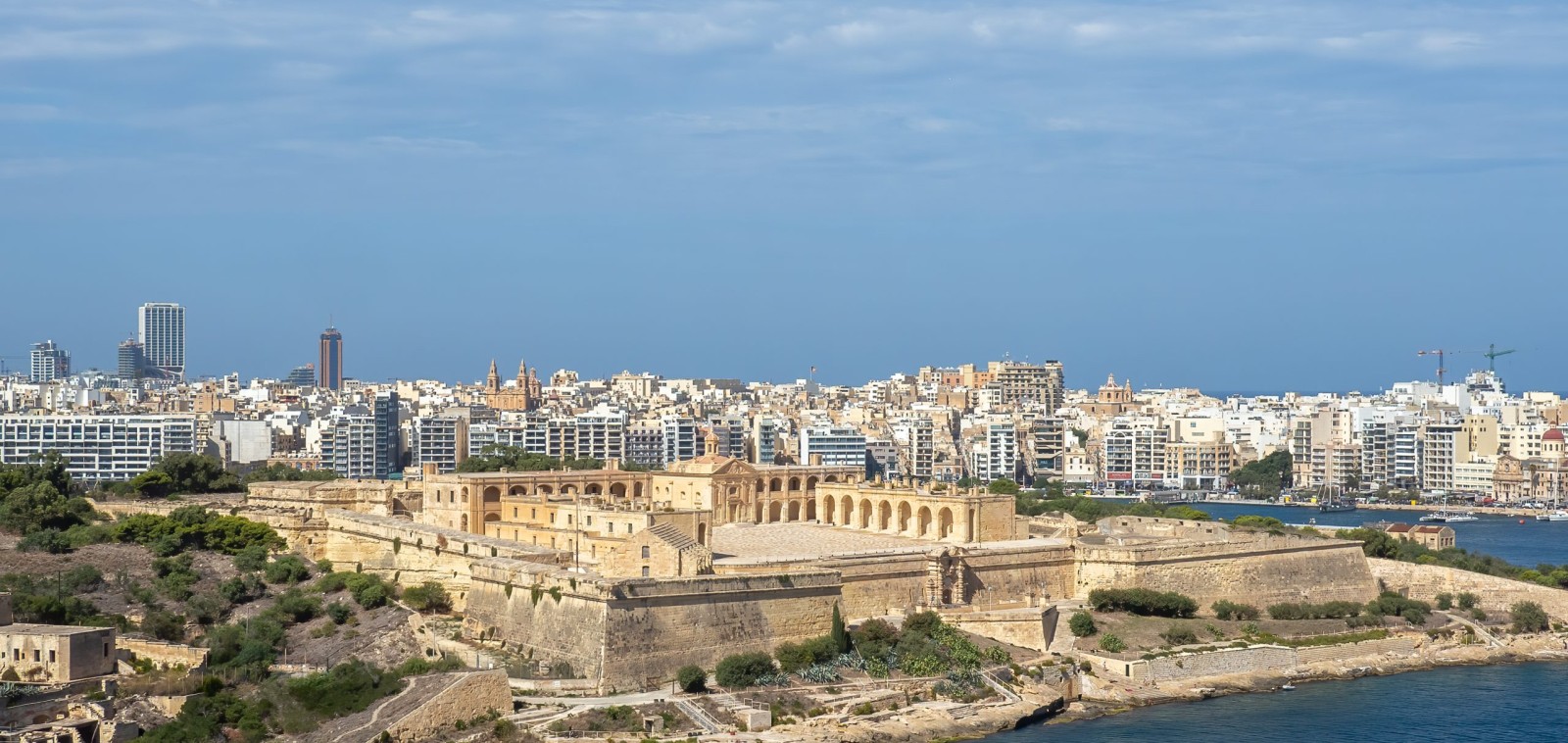
The Black Coffee Fort Manoel show turned into one of the most talked about nights of the Mediterranean summer, and by the time it happened on Sunday 13 September there was not a ticket left to buy. The Grammy winning South African DJ and producer took over Fort Manoel, an 18th century fortress that sits in Marsamxett Harbour with the UNESCO listed skyline of Valletta directly across the water, for an open air show promoted by 356 Entertainment Group.
It was not a festival slot or a club residency. It was a single night built around one venue, one headliner and a crowd that had been waiting since spring.
Black Coffee Fort Manoel sold out long before the gates opened
The demand was obvious from the first minute tickets went live. Pre sale allocations disappeared in under 90 minutes, and roughly 85 percent of the total capacity was gone before general sale even started. The remaining tickets did not last, and organisers confirmed a complete sell out months ahead of the date, with buyers coming from Malta and from across Europe.
That kind of sell out speed is rare for a one off show on an island of around half a million people. It says something about where Black Coffee currently sits in the electronic music landscape, and it also says something about how much appetite there is for events that put a serious artist in a place people would never normally get to dance in.
A fortress as a dancefloor
Fort Manoel was built by the Order of Saint John in the 1720s and named after Grand Master António Manoel de Vilhena. It is a baroque military structure with a central parade ground, arched galleries and stone walls that open directly onto the harbour. For most of its life it was a defensive position, then a film location, then a restored heritage site.
On 13 September it was a dancefloor. Doors opened at 4pm, and ticket holders were encouraged to arrive early rather than roll in at peak time, partly to avoid queues and harbour traffic, and partly because the build up through the afternoon was designed to be part of the experience. Sunset over Valletta did the rest of the work.
The line up that carried the afternoon
Black Coffee did not arrive alone. The full support bill was confirmed on 2 September, once the event was already sold out, which meant nobody bought a ticket for the undercard. They got a strong one anyway.
JAMIIE opened proceedings. The DJ and producer, of German and Nigerian heritage, has built her reputation on afro house and has played Tomorrowland, Ultra Music Festival, Hï Ibiza and DC10, as well as collaborating with Black Coffee in the past. FALYN, based in Miami, followed with a blend of afro house, afro tech and melodic material. Maltese DJ and producer Carl Bee completed the bill, bringing a local name with genuine international credentials: his releases have landed on Diynamic, Get Physical and Aeterna, with support from Solomun, Carl Cox, Meduza and Tiësto.
Putting a Maltese artist alongside two international selectors mattered. It kept the night from feeling like a touring production that simply landed on the island, collected the money and left.
Why heritage venues keep pulling in electronic music
Fort Manoel is part of a wider pattern. Promoters across Europe have spent the last few years moving away from purpose built arenas and towards buildings that carry their own weight: quarries, power stations, cathedrals, castles and forts. The reasoning is straightforward. Sound systems and production can be rented anywhere, but a 300 year old stone courtyard facing a harbour cannot.
The same logic is visible in London, where fabric recently locked in a long term arrangement to programme events inside a landmark religious building, a move that would have been unthinkable a decade ago. You can read about that deal in our piece on fabric and St Paul’s Cathedral.
There is a practical side too. Heritage venues come with capacity limits, curfews, noise restrictions and conservation rules, which forces promoters to design tighter, shorter, more curated events rather than 12 hour marathons. Scarcity is built into the format, and scarcity is exactly what sold Fort Manoel out in 90 minutes.
Where Malta sits now
Malta has hosted large scale electronic music events for years, but the island has often been treated as a summer stopover rather than a destination in its own right. A completely sold out Black Coffee show inside a national monument, with a significant share of the audience flying in, points in a different direction.
It also landed at the right moment in the calendar. Mid September is when the Mediterranean season starts winding down and the closing party circuit takes over, from Ibiza outwards. For a look at how that end of season stretch is shaping up, see our coverage of the Ushuaïa Ibiza closing party 2026.
What Fort Manoel proved is that a single well placed night can compete with an entire season of residencies for attention. No lineup of 15 DJs, no 11 hour running order, no festival branding. One artist, one fortress, one sunset, and a crowd that had booked flights around it. For full details on the support bill and the sell out, Lovin Malta covered the announcement as it happened.
The obvious question now is whether 356 Entertainment Group can repeat it, and whether Fort Manoel becomes a recurring fixture rather than a one off. On the evidence of how fast those tickets moved, the appetite is already there.
Lead image: Fort Manoel, Gżira, Malta. Photo: Rhododendrites, CC BY-SA 4.0, via Wikimedia Commons.