
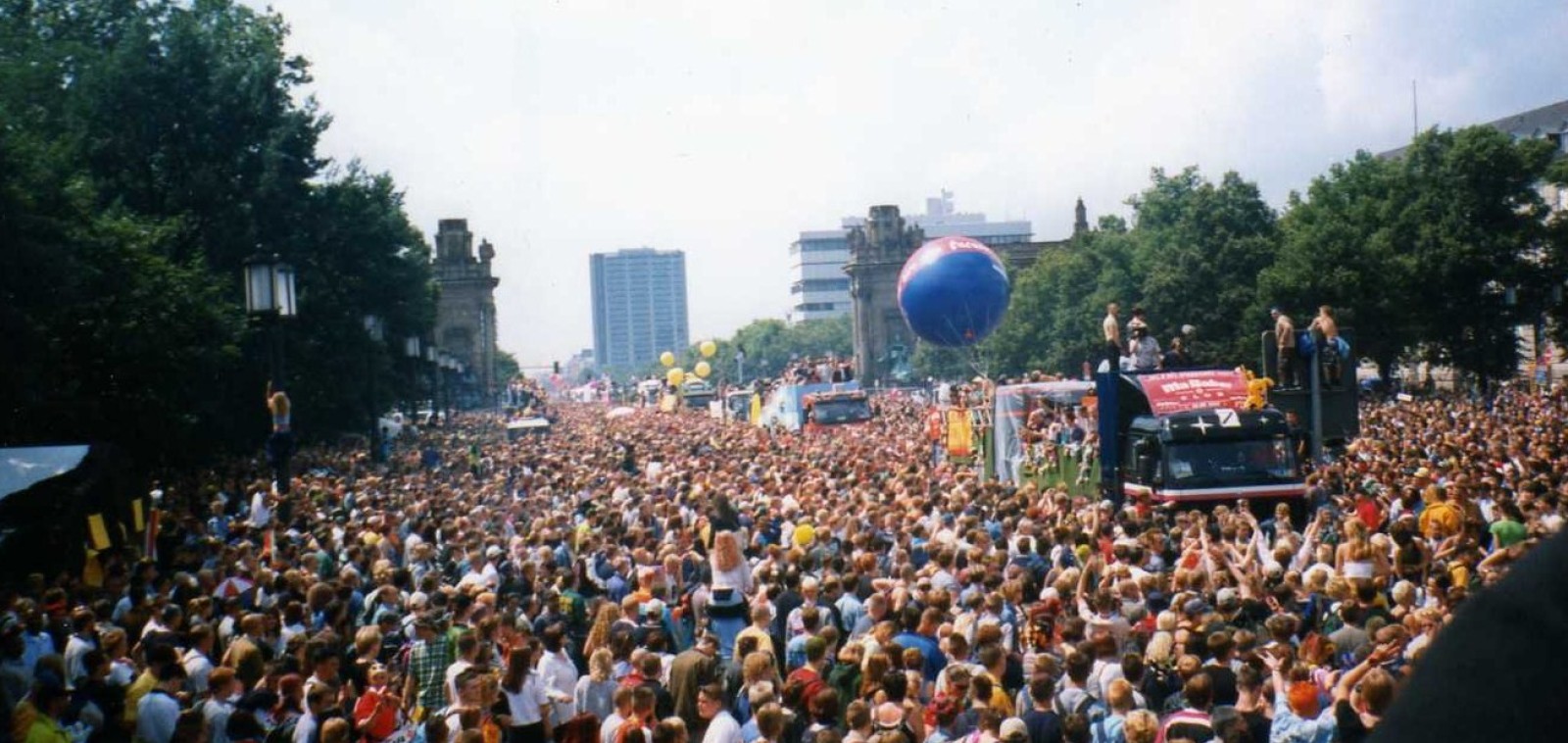
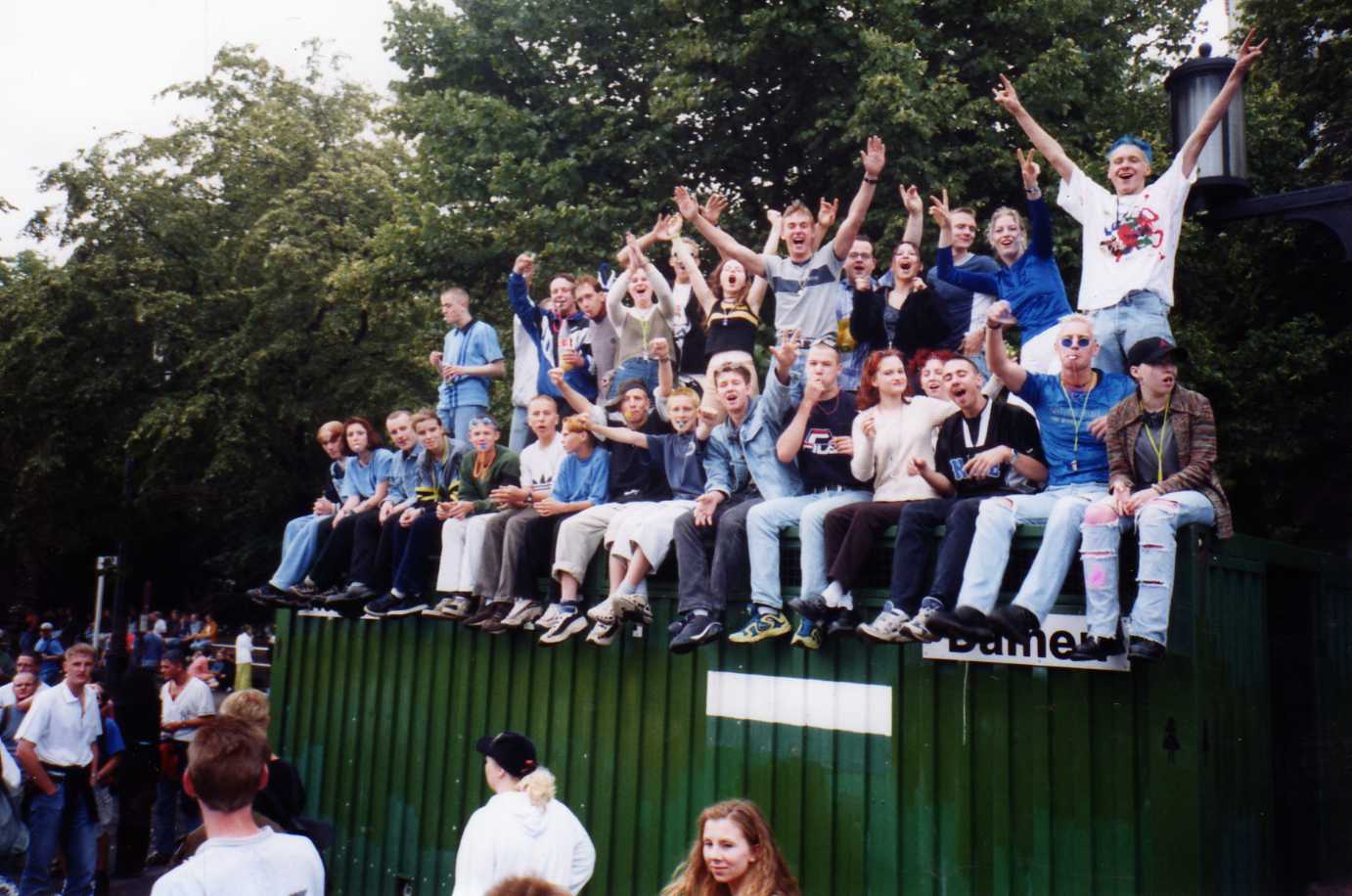
On Saturday, July 11, 1998, the Love Parade 1998 turned Berlin’s Tiergarten into the biggest dancefloor in Europe. Under the motto “One World One Future”, hundreds of thousands of ravers packed the Straße des 17. Juni, trucks loaded with sound systems crawled toward the Victory Column, and the city’s techno scene put on a show the rest of the world could only read about the next day. Nobody filmed it on a phone. Nobody streamed it. You were either there or you were not.
From 150 people to a city in motion
The Love Parade started in July 1989 in West Berlin with about 150 people. Matthias Roeingh, better known as Dr. Motte, and Danielle de Picciotto registered it as a political demonstration under the playful slogan “Friede, Freude, Eierkuchen” (peace, joy, pancakes). Four months later the Wall came down, and techno became the soundtrack of a reunited city.
By the mid nineties the event had outgrown the Kurfürstendamm. In 1996 it moved to the Straße des 17. Juni, the long avenue that cuts through the Tiergarten, with the Siegessäule and its golden angel at the center. That angel became the unofficial emblem of the parade, and the final rally around the column became its climax.
Love Parade 1998 and “One World One Future”
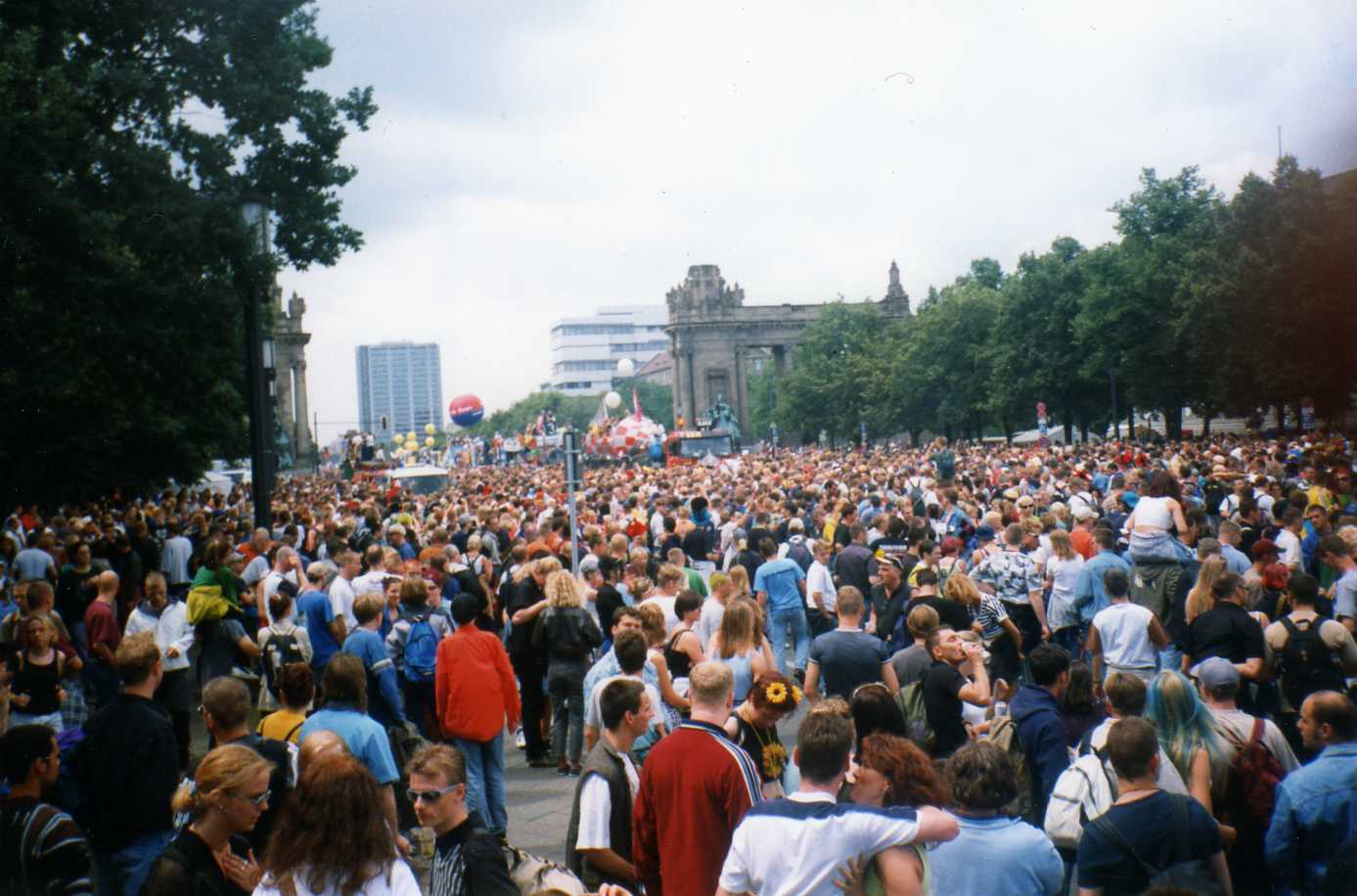
The 1998 edition sat right in the middle of the parade’s golden era. Estimates for the crowd range from about 800,000 to around a million, and the figures published in those years have since been shown to be generous, so the exact number will never be settled. What is clear is the scale: a continuous sea of people stretching from the Brandenburg Gate side of the park to the Ernst Reuter Platz end.
Since 1997 every parade had its own official anthem. For 1998 Dr. Motte and WestBam released “One World One Future” on Low Spirit in June, and the single climbed to No. 6 in Germany, spending 14 weeks on the chart. The year before, their hymn “Sunshine” had reached No. 5. These records turned the parade’s motto into something people could buy, play at home and carry into clubs all summer.
Mark Spoon and “Meet Her at the Love Parade”
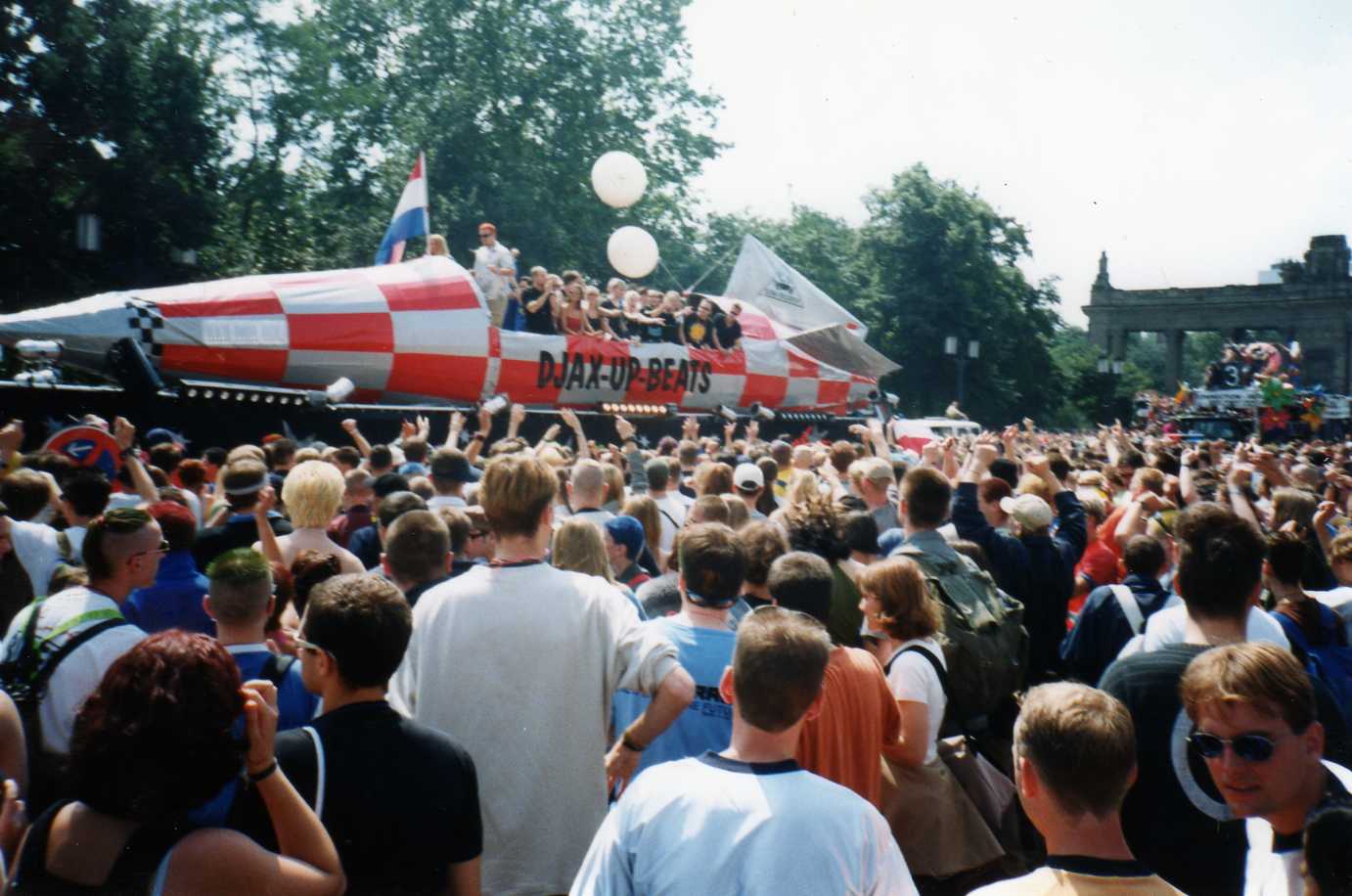
In footage from 1998 that is still shared widely online, Mark Spoon stands behind the decks in front of the Tiergarten crowd with the Nalin & Kane remix of “Meet Her at the Love Parade” ringing out. It is a perfect fit. The original track by German DJ Da Hool came out on Kosmo in August 1997 and went top five in Germany, and the Nalin & Kane version hit No. 15 in the UK in February 1998. A song named after the parade, played at the parade, to a crowd that knew every note.
Spoon, born Markus Löffel in Frankfurt in 1966, was one half of Jam & Spoon with Rolf Ellmer and one of the pioneers of German trance, with hits like “Right in the Night”. He was a Love Parade regular for years. He died in Berlin in January 2006 at 39, and the parade that summer paid tribute to him with a live performance of his song “Be Angeled”. For many fans, the 1998 clip is how they remember him.
No phones, no livestream, just presence
Part of what makes the Love Parade 1998 footage so striking now is what is missing. There are no raised screens, no ring lights, no one filming the drop. People found their friends by agreeing on a meeting point near a specific float, and if that failed, they simply danced with strangers. The memories that survive come from camcorders, film cameras and the handful of TV crews on the route.
That sense of being fully in the moment is exactly what many promoters are trying to recreate today with phone free dancefloors. In 1998 it was not a policy. It was just how raving worked.
Growing pains behind the party
The size of the event brought its own problems. Because the Love Parade was registered as a political demonstration, the city of Berlin carried the costs of security and cleanup, and every summer brought new arguments about the tons of waste left in the park. In 1998 the critical side of the scene also found its own voice: the protest event that had started as the Hateparade the year before continued under the name Fuckparade.
The peak was still to come. In 1999 the parade drew a record 1.5 million people under the motto “Music Is The Key”. In 2001 the courts ruled that it was a commercial event rather than a demonstration, and the organizers had to cover the costs themselves. The Berlin parade went quiet, returned in 2006, moved to the Ruhr region from 2007, and ended for good after the crowd crush in Duisburg in 2010 that killed 21 people.
Why 1998 still matters
Dr. Motte has since revived the spirit of the event with Rave The Planet, which has paraded through Berlin every summer since July 2022 and campaigns for the city’s techno culture to be recognized as world heritage. You can read the full timeline of the original on the Love Parade Wikipedia entry.
But the image of the Love Parade 1998 endures for a simpler reason. It shows electronic music at a moment when it belonged to the people in the street, before it belonged to the feed. One world, one future, one very long Saturday in the Tiergarten. For more on how the scene was built from the ground up, see our piece on Mr Tape, the Latvian DJ who mixed on reel to reel tape.