
Born Slippy .NUXX is one of the few dance records that stopped being a club track and became a piece of cultural shorthand. Underworld released it in 1995 as a B side that almost nobody was chasing. A year later it was the sound of a generation walking out of a cinema, and it climbed to No. 2 on the UK Singles Chart.
Thirty years on from the film that carried it there, the story is worth telling properly, because most of what people think they know about the track is slightly wrong.
Born Slippy .NUXX started as a B side
Underworld put out “Born Slippy” in May 1995 on Junior Boy’s Own. The A side was a different, harder, more abstract piece of music. The version everyone now knows, the one with the rolling synth line and the shouted vocal, was tucked away on the flip and marked .NUXX.
The credits belong to the three piece line up of the time: Rick Smith, Karl Hyde and Darren Emerson. The single did modest business. Underworld were already respected after dubnobasswithmyheadman, but nothing about that release suggested a top five record was sitting on the B side.
The Soho night behind the lyrics
Karl Hyde wrote the words after a heavy night of drinking in Soho, stumbling out of a pub and making his way toward Tottenham Court Road station to catch a late train home. The fragmented lines are written from the perspective of an alcoholic. The repeated shouts of “lager lager lager” were meant as self loathing, not celebration.
That distinction got lost almost immediately. Once the track exploded, it was adopted as a beery singalong, and Hyde has spoken since about how uncomfortable that appropriation made him. It is one of the sharpest examples in dance music of an audience hearing the exact opposite of what a writer intended.
How Danny Boyle found the track
The turn came from outside the dance world. Danny Boyle was hunting club records for Trainspotting and already knew dubnobasswithmyheadman. He picked up the “Born Slippy” single in HMV on Oxford Street, played the .NUXX version on the B side and reportedly said it was the end of the film.
Underworld said no at first. They were wary of how their music kept being used to soundtrack bleak portrayals of club culture. Boyle showed them a clip and won them over, and the track ended up carrying the closing sequence, that rush of freedom and betrayal as Renton walks away with the money.
Boyle later described the record as the heartbeat of the film. The relationship stuck: Hyde and Smith went on to serve as musical directors for the London 2012 Olympic opening ceremony, which Boyle directed.
1996: No. 2 in the UK and a record that outgrew the club
Trainspotting arrived in UK cinemas in February 1996 and the demand it created was immediate. The single was reissued and peaked at No. 2 on the UK Singles Chart in July 1996, a position no Underworld release had come close to before.
What made it travel was the structure. The track opens with a synth figure that sounds almost fragile, builds through a four to the floor push, then breaks into a release that works in a club at 3am and in a cinema at the closing credits. It is dance music with a narrative arc, which is exactly why a film director heard a film ending in it.
Why it still lands in 2026
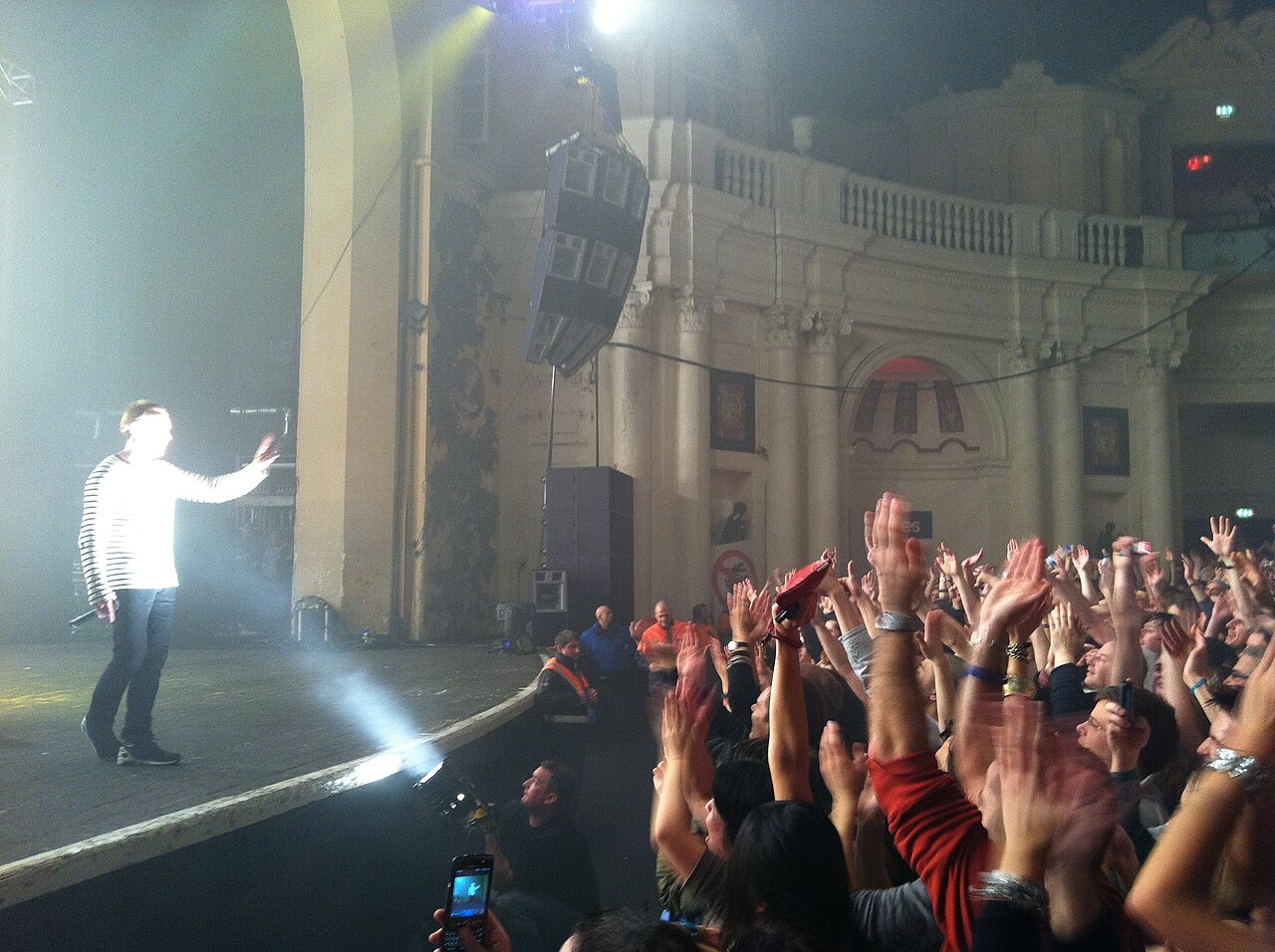
Plenty of 90s records get filed under nostalgia and stay there. Born Slippy .NUXX did not, mostly because Underworld never treated it as a museum piece. It has stayed in the live set as a closer, reshaped and stretched depending on the room, and it still functions as a genuine peak rather than a nod to the past.
The band spent 2026 on one of their most international touring years yet, with a run split across spring, summer, autumn and winter chapters that took in EDC Las Vegas, a European festival stretch through August and a North American leg. Meanwhile the Trainspotting soundtrack passed its thirtieth anniversary in February, which put the whole 1996 moment back into circulation.
The track also sits in a small category of records that changed how the wider public heard electronic music. It did not need a crossover remix or a pop vocal. It reached No. 2 as an eight minute club record with a shouted, unhappy lyric, and it got there because a film director trusted it to carry a scene.
That is the part worth remembering. Born Slippy .NUXX was not built to be an anthem. It was a B side written about a bad night, and it became the era anyway.
For more on the records that reshaped the floor, read our look at 10 tracks that changed house music forever and the story of how Mr Oizo’s Flat Beat went from an advert loop to a club staple. A detailed account of the record’s making is also available in MusicRadar’s feature on Born Slippy.