
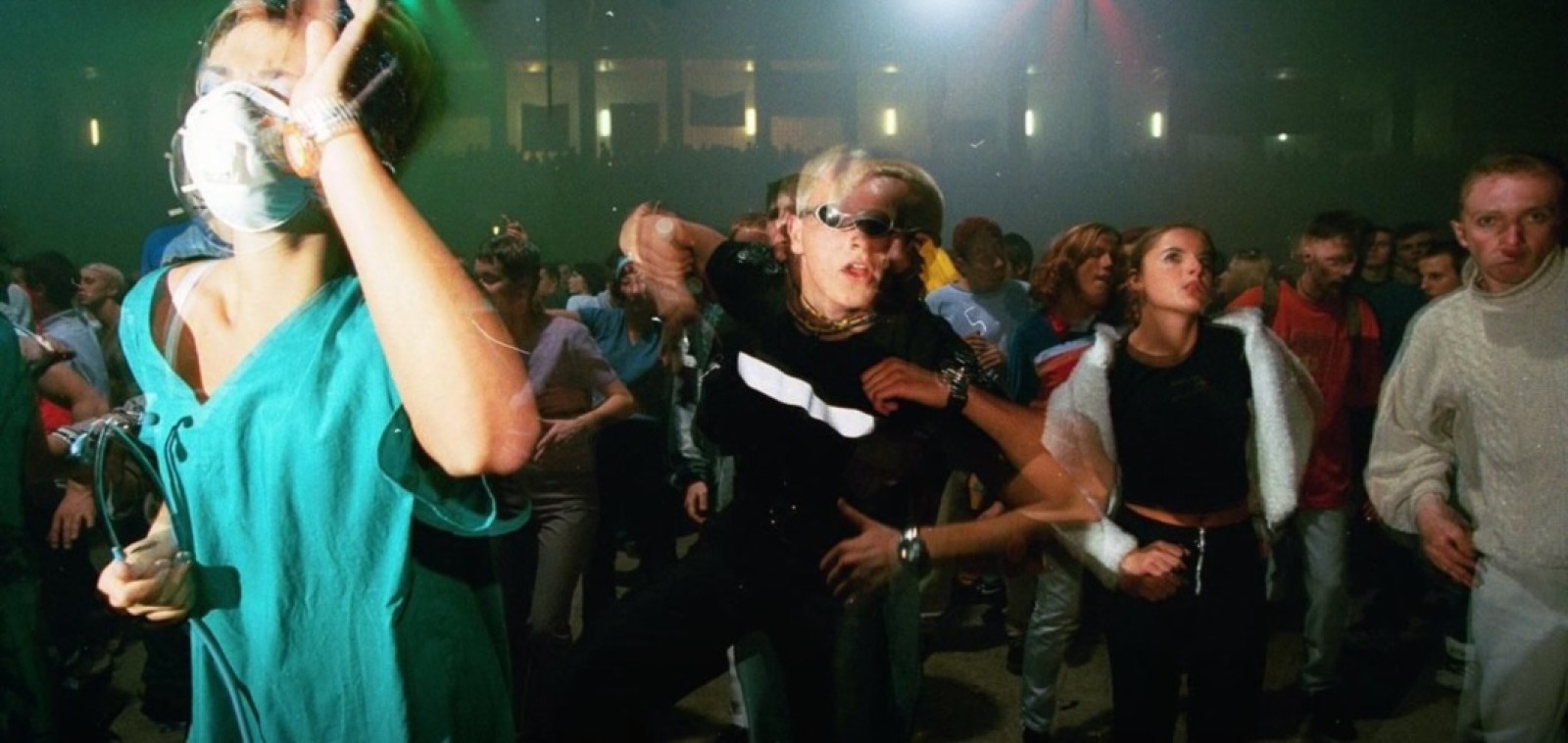
In the early 1990s, a generation of young Poles stepped out of one world and straight into another. Communism had collapsed, the borders were suddenly open, and nobody had written the rules for what came next. A lot of them found their answer in a dark room with a homemade sound system, a strobe light and a kick drum that did not stop until sunrise. This is what Poland’s 90s rave scene actually looked like, and why people are still talking about it three decades later.
The rave movement in Poland was never only about music. It became part of a generation finding its identity at the exact moment the country was reinventing its own.
Rave Culture Did Not Appear Out of Nowhere
Raves did not fall from the sky. The foundations were poured in cities far from Warsaw, in underground spaces where music offered community, acceptance and freedom. In Chicago, a club called The Warehouse opened in 1977, and its resident DJ Frankie Knuckles spent the next few years blending disco, soul and European electronics into something the crowd had never heard. People started asking for the music they played at The Warehouse, then simply called it house. You can trace the whole story in our look at the history of house music.
A few hundred miles away in Detroit, a young generation led by Juan Atkins, Derrick May and Kevin Saunderson built techno out of drum machines, cheap synths and science fiction dreams. Long before sponsorships, VIP tables and social media, these scenes ran on little more than records and belief. By the end of the 1980s that energy had crossed the Atlantic and reached a Europe that was about to change beyond recognition.
Poland After Communism: A Blank Page With a 4/4 Beat
When the Berlin Wall fell in 1989 and the Eastern Bloc dissolved, Poland was suddenly free and suddenly unsure of itself. An entire society had to work out how to live, work and have fun in a country that was privatising in real time. For many young people, the dancefloor became the easiest place to make sense of all that change.
With freedom came something very practical: access. The synthesizers, samplers and computers that had powered electronic music across Western Europe were finally within reach. DJs could travel, dig for records abroad and bring them home, which meant Polish dancefloors were suddenly hearing techno, house, trance, jungle and breakbeat for the first time. Unlike Western scenes that were already well established, Poland’s rave culture grew up alongside a nation rebuilding itself from scratch. If you want the parallel story across the continent, our piece on how the UK built rave culture covers the same years from a very different angle.
Warehouses, Abandoned Factories and Art Raves
The venues told the whole story. Underground parties took over warehouses, empty factories and improvised rooms that the old system had left behind. The scene blended techno, house, trance and experimental electronic music with DIY culture, art and pure self invention. DJs played on homemade sound systems, visuals were built from whatever gear was lying around, and every night felt like an experiment that might never happen the same way twice.
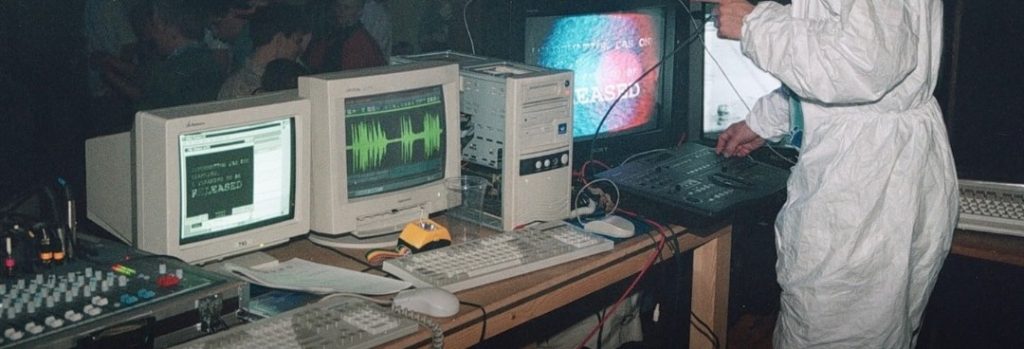
Some of it pushed straight into art. In 1994, in the central Polish town of Konin, a group staged a now legendary rave installation in the basement of a former communist shopping mall, an event known as 120 Hours of Mega Techno. Club nights such as Blue Velvet and Filtry gave the movement steadier homes, while a new wave of promoters turned one off parties into something close to a national network. For the artists and curators involved, rave was not just a night out. It was a statement about what a free Poland could feel like.
From Underground Rooms to Club Ekwador
By the late 1990s the underground was turning into an institution. In 1998, in the tiny village of Manieczki about 40 kilometres south of Poznań, Club Ekwador opened inside a former socialist shopping complex. Named after a 90s trance anthem, it grew into the most famous techno club in the country, pulling thousands of ravers who travelled hundreds of kilometres every weekend just to be in the room. At its peak the club even brought its sound system to Berlin’s Love Parade and to Łódź’s own Freedom Parade.
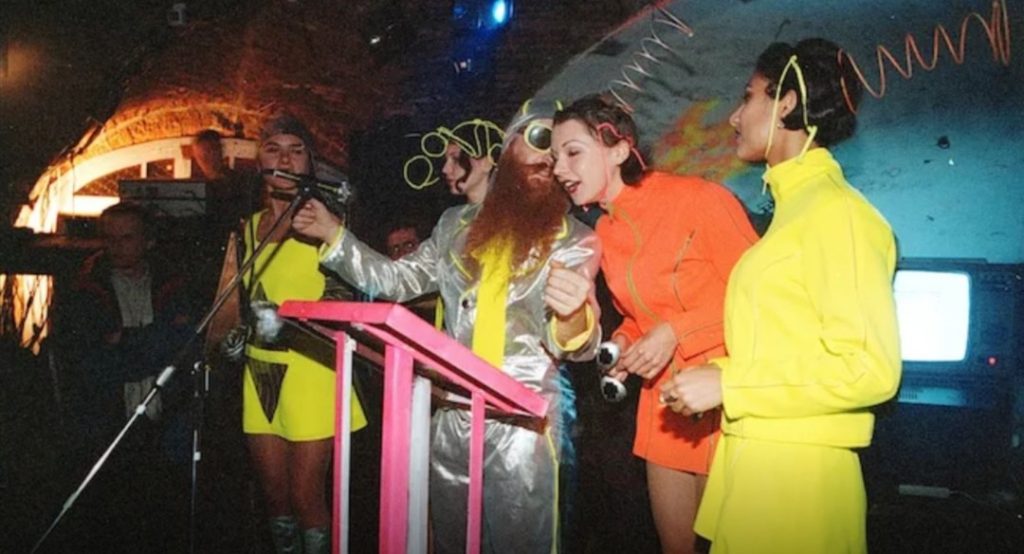
The music was being documented as well as danced to. In 1999 the producer Jacek Sienkiewicz founded Recognition Recordings, one of Poland’s first dedicated techno labels, giving local artists a way to press their own sound rather than import everyone else’s. The scene that started in squats and basements now had clubs, labels and a crowd that numbered in the thousands. You can read more about how strange and singular it all became in Culture.pl’s history of Polish techno and Club Ekwador.
Why Poland’s 90s Rave Scene Still Echoes Today
Three decades on, those years are being treated as history worth preserving. In 2017 the Museum of Modern Art in Warsaw staged 140 BPM, an exhibition co created by curator Łukasz Ronduda that framed the early rave era as a genuine meeting point of music and art. Ronduda went on to co direct a 2024 feature film, simply called Rave, following fictional ravers through a world built on very real memories.
The through line runs all the way to now. Poland today is one of Europe’s most exciting electronic destinations, with festivals like Audioriver and the experimental Unsound drawing crowds from across the world and a new generation of Polish DJs touring globally. The warehouses and basements are mostly gone, but the idea behind them survived. A dancefloor that once stood for freedom in a newly open country never really stopped meaning exactly that.
That is what raving in Poland in the 90s really looked like: homemade, fearless and a little bit holy. Not a trend bought off a shelf, but a scene a whole generation built for itself, right as it was deciding who it wanted to be.
Archive photography of Poland’s rave scene by Sławomir Kamiński, Łukasz Ronduda and Jacek Bałk, via @housemusic.us.