

The UMG ElevenLabs deal announced on Thursday, September 10, hands the biggest record company in the world a new AI remix engine. Universal Music Group and ElevenLabs signed a multiyear licensing agreement and a wider product partnership whose first output will be an AI music platform that lets fans build remixes, mashups and new versions of tracks by artists who choose to take part. It is the first agreement ElevenLabs has signed with a major label, and it arrived one day after rival Suno launched its v6 models with Warner Music Group, BMG and Believe. For a scene built on remixes, edits and bootlegs, this is the week the majors decided who gets to run the remix desk.
What the UMG ElevenLabs deal actually covers
According to the joint announcement, the agreement has two parts. The first is licensing: ElevenLabs gets access to UMG’s catalogue for a new platform, described as “built on licensed music and artist participation”. The second is product development: the two companies say they will jointly build AI audio tools for artists and songwriters, with more products and fan experiences promised “in the months and years to come”.
The fan platform is still in development and no launch date has been given. What UMG and ElevenLabs have confirmed is the feature list at launch: remixes and mashups, “new track interpretations”, and “personalized vocal experiences”. Only artists and songwriters who opt in will have their music available on it. The platform will run separately from ElevenLabs’ existing products, the Music API used by developers and ElevenMusic, its consumer app for generating and editing original songs.

Sir Lucian Grainge, UMG’s Chairman and CEO, framed the deal around artists and fans in the official statement: “The most exciting possibilities for AI and music are those that put artists, songwriters, and fans at the center.” He added that both companies agree “responsible AI can inspire discovery, deepen engagement between artists and fans, and unlock new revenue opportunities for the creative community.”
Why ElevenLabs, and why now
ElevenLabs is best known for voice cloning and text to speech, but it has been moving into music since August 2025, when it launched ElevenMusic alongside licensing deals with Merlin and Kobalt. Believe joined later, and by April the company said more than 4,000 independent artists were using the platform, according to Music Business Worldwide. In February it closed a $500 million Series D led by Sequoia Capital at an $11 billion valuation, more than double the $5.4 billion Suno reached in June. Founded in 2022 by Mati Staniszewski and Piotr Dąbkowski, the company is headquartered in London and New York and has said it is building toward an IPO.

“AI opens up incredible possibilities for interacting with our favorite music and artists,” Staniszewski said in the announcement. “By combining UMG’s global community and rights management expertise, with our AI models and products, we’ll enable artists and songwriters to create powerful new experiences for their fans, and ensure they are fairly compensated.”
That last clause is the one to watch. UMG has spent two years suing AI companies over training data and is still a plaintiff, alongside Sony Music, in the RIAA coordinated copyright case against Suno filed in Boston in June 2024. It settled its own case against Udio in October 2025 and turned that into a licensing agreement, a move that later drew a lawsuit from the American Federation of Musicians, which claims the Udio deal was reached without compensation or credit for the musicians on the recordings. Every new AI partnership UMG signs now lands inside that argument.
What it means for remix culture and dance producers
Dance music has always run on unofficial versions. Edits, bootlegs and mashups fill DJ sets long before a label clears anything, and the gap between what producers make and what rights holders allow has shaped the genre for forty years. Our recent piece on the Kraftwerk sampling ruling in Germany showed how slowly the legal side moves. The UMG platform is an attempt to close that gap from the top: an official, licensed space where fans can rework catalogue tracks and where the artist has agreed in advance.
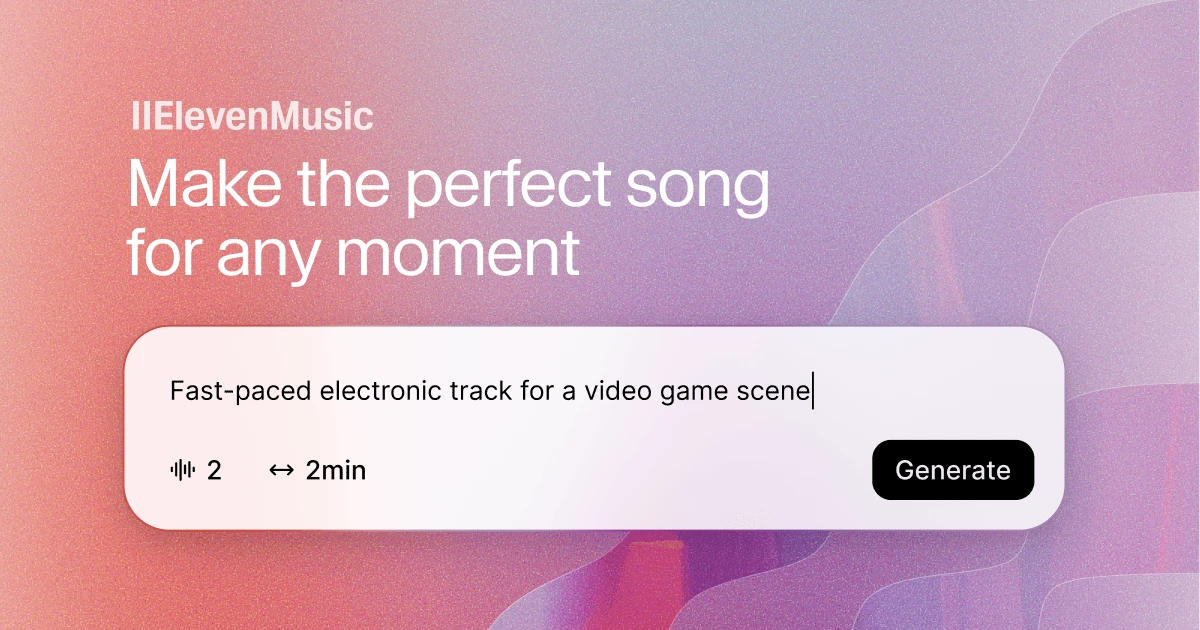
The open questions are practical ones. Digital Music News points out that UMG has argued for a walled garden approach to AI outputs, which suggests remixes made on the platform will most likely stay inside it rather than being released to streaming services. ElevenMusic’s paid tiers currently offer stems, high quality downloads and distribution to Spotify and Apple Music, but the UMG platform is a separate product and neither company has said whether any of that carries over. Nothing in the announcement mentions DJ friendly exports, tempo or key data, or how a fan remix would be credited or paid out if it took off. For producers, the more interesting promise is the second half of the agreement: dedicated AI audio tools for artists and songwriters, which could mean licensed stem separation, vocal tools and reference matching built on catalogue the labels actually control. UMG has not detailed those tools yet.
The bigger AI licensing race
The timing is not an accident. Suno released its v6 model suite on September 9 in partnership with Warner Music Group, BMG and Believe, and its Chief Product Officer Jack Brody has said the training data excludes recordings from UMG and Sony. Udio is preparing a new licensed product with Merlin and the majors other than Sony. Spotify has been developing its own remix and mashup tools under UMG licensing. In August all three majors took stakes in Stability AI, and UMG has also partnered with Hook to license fan made edits on social media. The last time we covered this beat, it was Apple Music adding AI labels to its catalogue. In the space of a few weeks, the industry has moved from tagging AI music to selling the tools that make it.
Put simply, every major now has at least one licensed generative partner, and the competition is shifting from lawsuits to product. ElevenLabs is entering that race with more money than any of its rivals and, as of this week, the largest catalogue.
What happens next
There is no launch date, no pricing and no list of participating artists. UMG’s labels, Astralwerks and Virgin among them, hold a deep bench of dance catalogue, so which of those artists opt in will decide whether this matters to house and techno fans or stays a pop novelty. ElevenLabs says the platform will be “distinct and offered separately” from ElevenMusic, and the official announcement on the ElevenLabs blog is the only primary source so far. Expect more detail once artists start signing on, and expect the AFM case and the Suno litigation to keep shaping how these deals are written.
UMG ElevenLabs deal: FAQ
What is the UMG ElevenLabs deal?
A multiyear licensing agreement and strategic partnership announced on September 10, 2026. It starts with a new AI music platform for fans and includes joint development of AI audio products for artists and songwriters.
What will fans be able to do on the platform?
Create remixes and mashups, new interpretations of tracks, and personalized vocal experiences using licensed music from artists and songwriters who choose to participate.
Is it the same as ElevenMusic?
No. The UMG platform will be a separate product from ElevenMusic and from the ElevenLabs Music API.
When does it launch?
No launch date has been announced. Both companies describe the platform as currently in development.
Will remixes made on the platform be released on streaming services?
Unconfirmed. Neither company has addressed distribution, and industry reporting suggests outputs will most likely remain within the platform.
The UMG ElevenLabs deal will be judged on the details that have not been published yet: which artists take part, what fans can do with what they make, and how the money flows back. For now, the headline is that the world’s largest label has picked the best funded AI audio company on the market to build its remix future, and it did so the day after its biggest rival picked Suno.