Tomorrowland is the festival every electronic music fan measures the rest of the calendar against, yet even loyal visitors miss how strange and ambitious it really is. Beyond the fireworks and the giant main stage sit traditions, hidden rooms and logistics that feel closer to a small country than a weekend party. Here are nine things you didn’t know about Tomorrowland, the Belgian giant that returns to Boom this July.
The 2026 edition runs across two weekends, from July 17 to 19 and July 24 to 26, at the De Schorre grounds. If you are going, or just dreaming about it, these details explain why the festival has become the benchmark for the entire industry.
The things you didn’t know about Tomorrowland start with its sheer scale
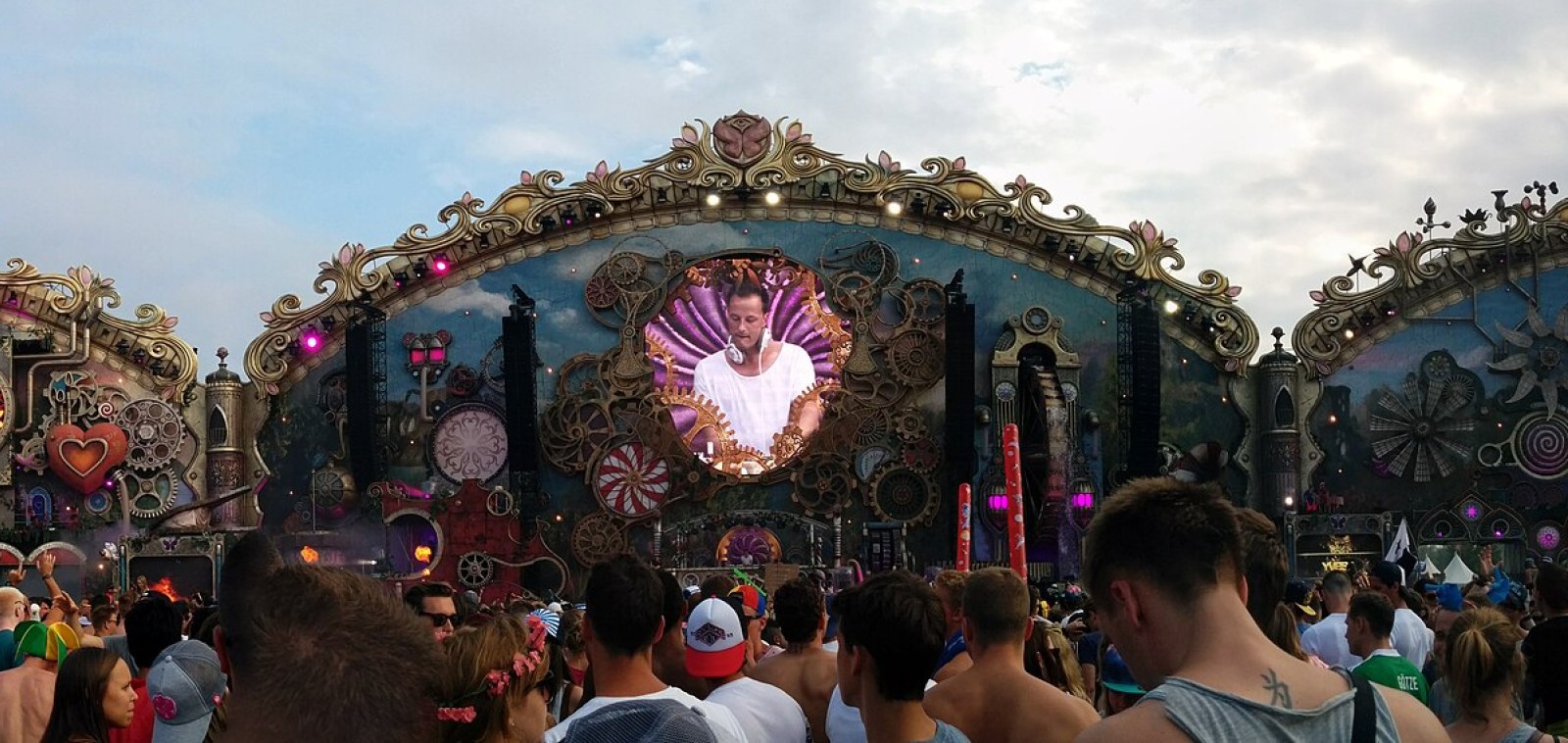
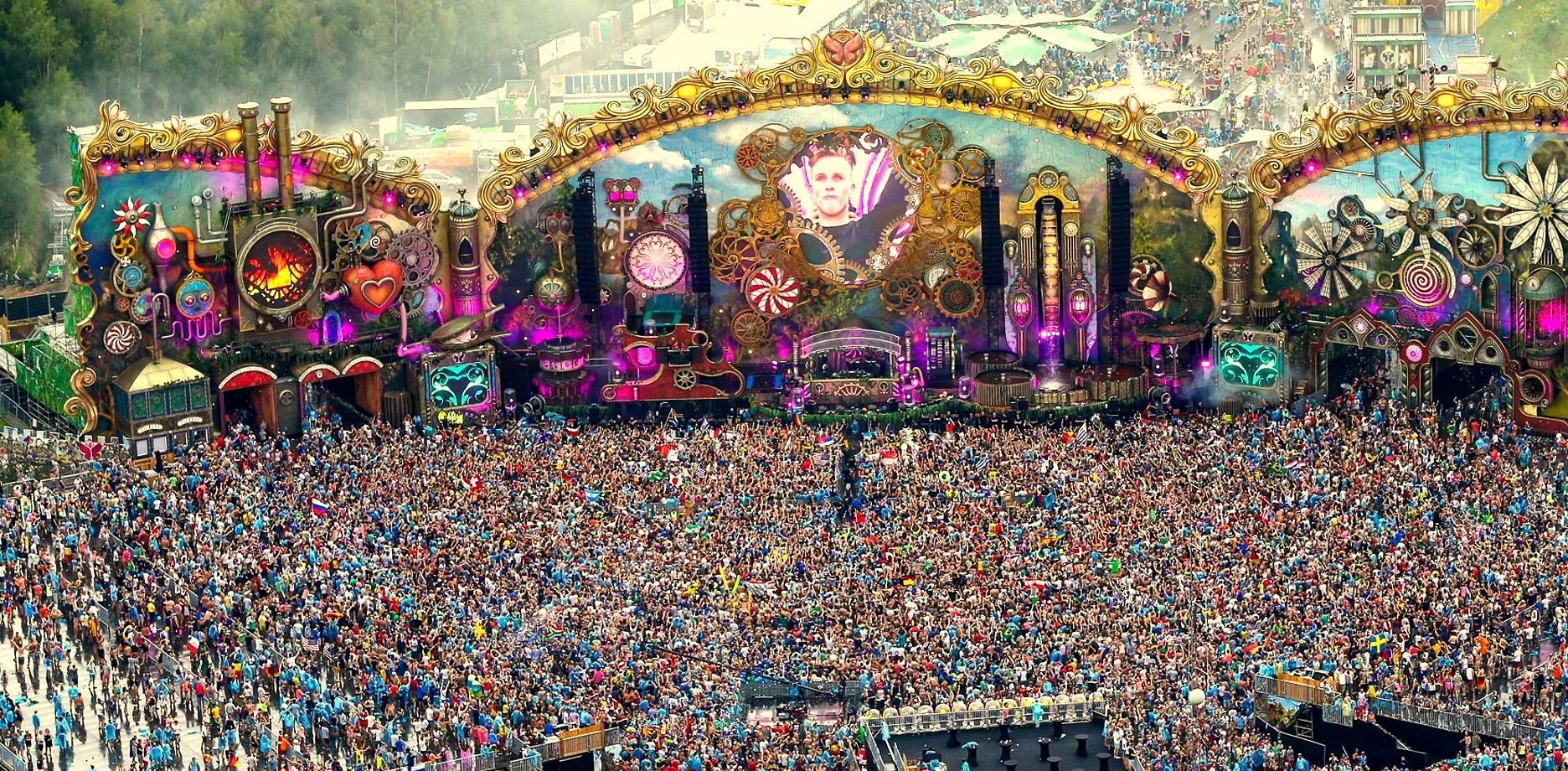
Tomorrowland draws roughly 400,000 people across its two weekends, with each weekend capped near 200,000 fans. They travel from more than 200 countries, which makes the crowd feel less like a national festival and more like a global gathering. Hundreds of artists perform across the site, and the production rivals that of a televised sporting event. The main stage alone is rebuilt from scratch every year around a new theme, and it has grown into one of the most photographed structures in live music.
DreamVille is a city that appears once a year
Most festivalgoers camp at DreamVille, and calling it a campsite undersells it. The site works like a temporary town, with a supermarket, food courts, coffee bars, a hair salon, charging stations and a recovery area that runs yoga and fitness classes. There are open air showers, endless toilets and a nightly program of its own, so many campers barely need to leave until the music starts. For a few days each summer, DreamVille effectively becomes one of the larger population centers in the region.
The festival runs on its own currency
You cannot pay with cash or card at most points inside Tomorrowland. Everything runs on Pearls, a cashless currency loaded onto the festival wristband. You top up before or during the event, tap to buy food, drinks and merchandise, and any unused balance is refunded afterward minus a small service fee. The system keeps queues short and doubles as a security feature, since the same wristband is also your entry pass.
A hidden Rave Cave and stages that change every year
Tomorrowland spreads across sixteen stages, and every one carries its own theme, design and musical identity. The best kept secret among them is the Rave Cave, a stage tucked into a former quarry where a tunnel opens onto one of the festival’s most intimate dancefloors. Regulars treat finding it as a rite of passage. Because the designs are rebuilt each year, no two editions of the festival ever look the same, which is part of why fans keep coming back.
Every edition has its own novel
Tomorrowland does not just pick a theme, it writes a book about it. Each edition comes with an original fantasy novel that runs past 300 pages and expands the story behind that year’s main stage. The tradition started with The Rise of Adscendo, which told the origin tale of the Adscendo universe, and later editions carried the idea forward. It is an unusual amount of world building for a music festival, and it gives the visual spectacle a narrative spine.
Symphony of Unity puts an orchestra in the fields
One of the most emotional moments of any edition has nothing to do with a headline DJ. Symphony of Unity is an orchestral project born at Tomorrowland in 2015 that reworks famous electronic anthems for a live classical ensemble. Strings, brass and choir fill the fields with versions of tracks the crowd usually hears through a club system, and the result has become a signature Tomorrowland experience.
A festival that powers the local economy
Tomorrowland is also a serious economic engine. An impact study tied to the Belgian edition found that the two weekends generate close to 281 million euros in economic activity and support more than 1,900 full time jobs, with goods and services sourced from over a thousand local suppliers. Around 15,000 people are involved in staging the event. Few cultural happenings of any kind move that much money through a single region in a matter of days, and it is a reminder that not every festival enjoys the same stability. Cercle, the celebrated livestream series, recently revealed a financial crisis of its own.
It even prints a daily newspaper
To close the loop on the small country comparison, Tomorrowland publishes its own newspaper during the festival. Attendees receive a daily edition filled with set times, artist interviews and stories from the grounds, a printed keepsake in an age when almost everything else arrives as a push notification. Festivals increasingly double as cultural institutions, a shift also captured in the recent Burning Man documentary.
Whether you make it to Boom this July or watch the livestream from home, these are the things you didn’t know about Tomorrowland that turn a music festival into a world of its own. For themes, dates and the official impact reports, the organizers publish everything through the official Tomorrowland channels.
Cover photo: Fossiy, CC BY-SA 4.0, via Wikimedia Commons.