

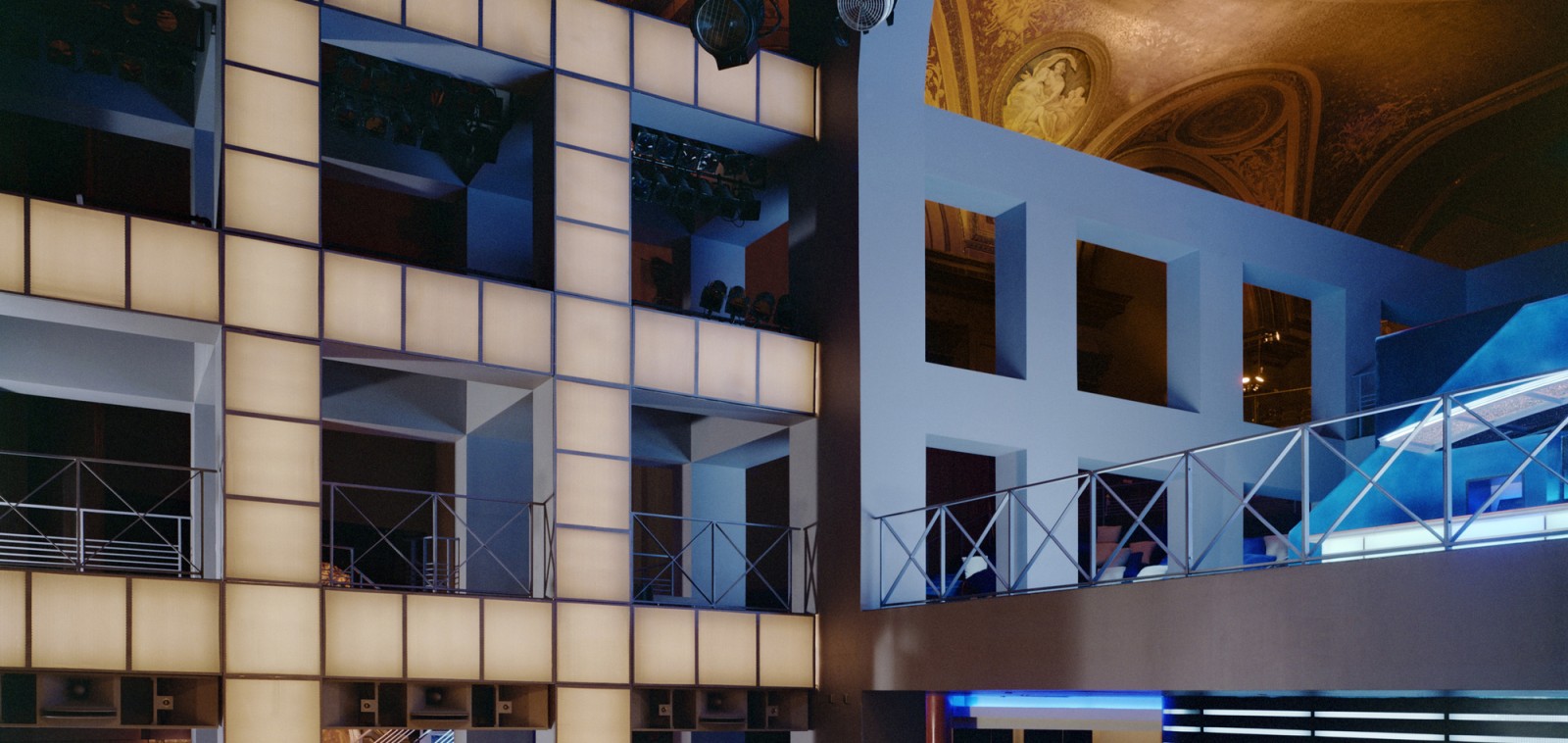
The Palladium NYC is the club that proved a dancefloor could be an architecture project and an art gallery at the same time. Between its reopening in May 1985 and its final party in the summer of 1997, the old theater at 126 East 14th Street hosted Keith Haring murals, a Jean Michel Basquiat bar, a room painted top to bottom by Kenny Scharf, and, in its last year, Junior Vasquez’s Arena, one of the defining house music parties of 1990s New York. This is the story housemusic.us told in a carousel this week, expanded with the details that make it worth remembering.
Before the Palladium NYC was a club, it was a rock hall
The building opened in 1927 as the Academy of Music, a Thomas W. Lamb theater that spent decades as a movie palace before becoming one of the city’s key rock venues in the 1970s. The Band recorded Rock of Ages there, the Grateful Dead played seven nights in a row in 1972, and after a mid 1970s refurbishment the venue was renamed the Palladium in September 1976. Bruce Springsteen played six shows there that autumn, and in September 1979 Paul Simonon smashed his bass on its stage, the moment Pennie Smith photographed for the cover of London Calling.
By 1985 the room needed a new idea. Steve Rubell and Ian Schrager, the pair behind Studio 54, had served their prison sentences for tax evasion and were ready for a second act. They took the lease on the Palladium and made a decision that separated it from every other big club of the era: instead of hiring a nightclub designer, they hired an architect.
Arata Isozaki builds a club inside a theater
Arata Isozaki, who would go on to win the Pritzker Prize in 2019, was asked to remodel a 3,500 seat theater with a void roughly 30 meters high. Rather than gut the ornate plasterwork, he left the historic shell intact and inserted a new structure inside it: a dancefloor pushed forward like a thrust stage, wrapped in a promenade of illuminated grids, staircases and catwalks. The old gilded ceiling stayed visible above the new geometry, so guests were always looking at 1927 and 1985 at once.
Isozaki described the project in Domus in November 1985 as an “immaterial building,” a space where lights, sound and video mattered more than walls. The New York Times ran an architectural appraisal on May 20, 1985, treating a discotheque as a serious work of design, which was almost unheard of at the time. The most photographed element was the bank of video screens on a motorized grid that could tilt and swing over the crowd, a piece of stage machinery that predates the LED walls now standard at every festival.
Haring, Basquiat, Scharf and Clemente on the walls
The art was not decoration added afterward. Rubell and Schrager commissioned site specific work from the downtown painters who were already regulars at their parties. Keith Haring painted a mural more than 30 feet tall for the main room, a wall of his dancing figures that read like a mirror of the crowd below. Jean Michel Basquiat produced large panels for the bar in the Mike Todd Room, the club’s VIP space, which also became home to Haoui Montaug’s No Entiendes cabaret. Francesco Clemente painted frescoes in the arched passages, and Kenny Scharf took an entire lounge, covering the walls, ceiling, furniture and even the pay phones in his cartoon cosmos.
The result was a club that doubled as a gallery of the 1980s New York art scene, at a moment when those artists were moving from the East Village into museums. Scharf later described it as a place where artists went to meet each other as much as to party, and the guest list on any given night ran from Andy Warhol to Grace Jones.
From Euro disco to Junior Vasquez’s Arena
Musically, the Palladium started as a big room disco with a European tilt, but the story that matters most to house music readers came at the end. When Sound Factory closed in 1995, Junior Vasquez needed a new home for the crowd that had followed him for years. In September 1996 he launched Arena at the Palladium, a Saturday night that ran straight through Sunday and quickly became the biggest weekly party in the city. Billed as “the gay man’s pleasure dome,” it drew a mixed crowd from across the tri state area and gave the aging superclub a final year at the center of New York nightlife.
Arena’s closing party on August 31, 1997 was, in effect, the Palladium’s funeral. The building had been sold to New York University, which demolished it that autumn. Recordings of Vasquez’s final “runway session” still circulate online, and comments on the housemusic.us carousel this week were full of people who remember the circular light stairs and the Arena era as the best nights of their lives.
What was lost, and what survived
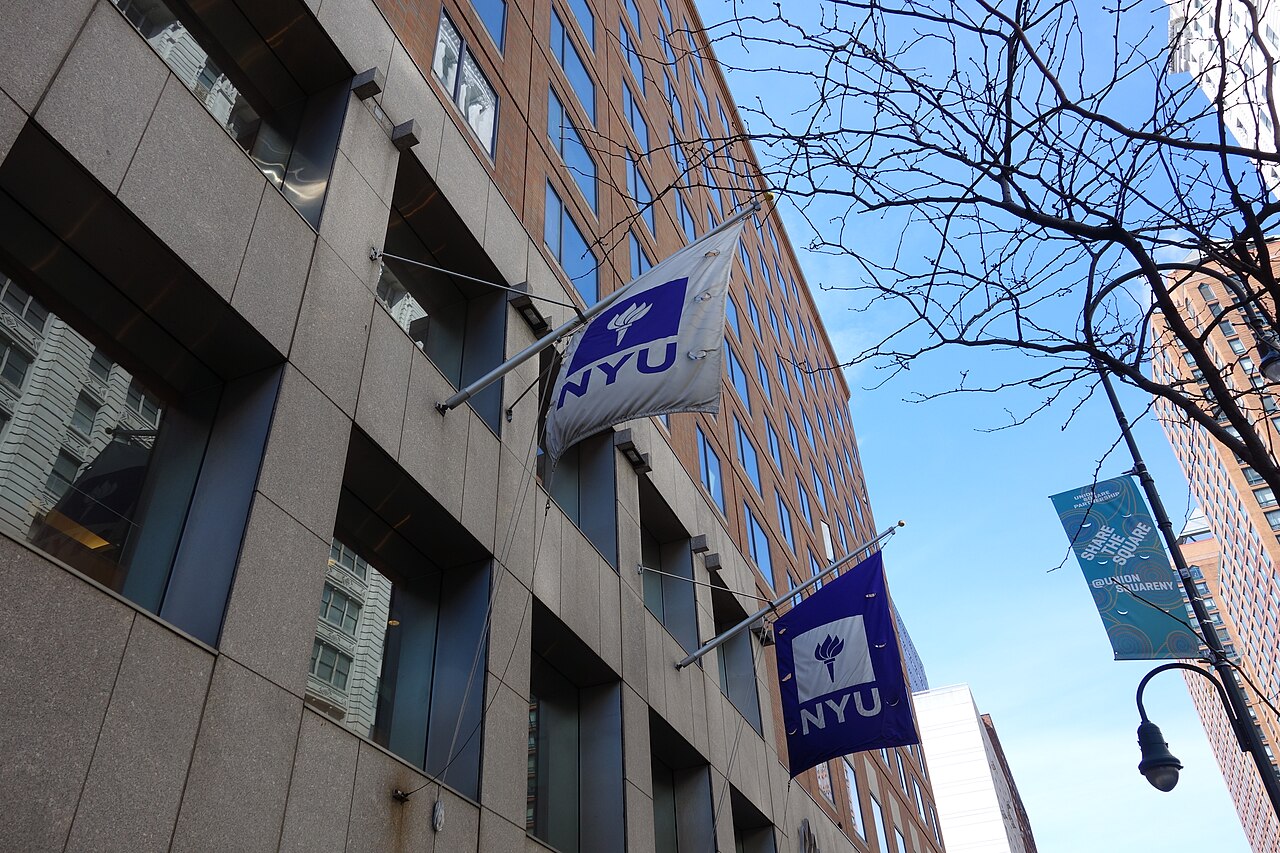
NYU’s Palladium Hall, a dormitory with a gym and dining hall, opened on the site in 2001 and kept only the name. The murals came down with the building. Haring’s wall and Clemente’s frescoes were painted directly onto the structure and are gone. Basquiat’s panels were on canvas and survived in the family’s collection; they were shown again in 2022, when the King Pleasure exhibition at the Starrett Lehigh Building rebuilt a version of the Mike Todd Room around them. Kenny Scharf’s room lives on in his own archive and in Timothy Hursley’s photographs, which remain the definitive record of what Isozaki built.
For house music, the Palladium’s legacy is less about the art than about scale. It was one of the first clubs to treat sound, video and architecture as a single system, and Arena showed that a 3,000 capacity room could carry the intensity of a Sound Factory night. Every superclub that followed, from Twilo to the current generation of purpose built venues, owes something to the experiment Rubell, Schrager and Isozaki ran on 14th Street between 1985 and 1997.
If you want more from the same era, read our pieces on how Trainspotting turned Born Slippy into a 90s anthem and on the Levi’s ad loop that made Flat Beat. For the full photo set of Isozaki’s interior, see ArchDaily’s feature on Timothy Hursley’s Palladium photographs.