
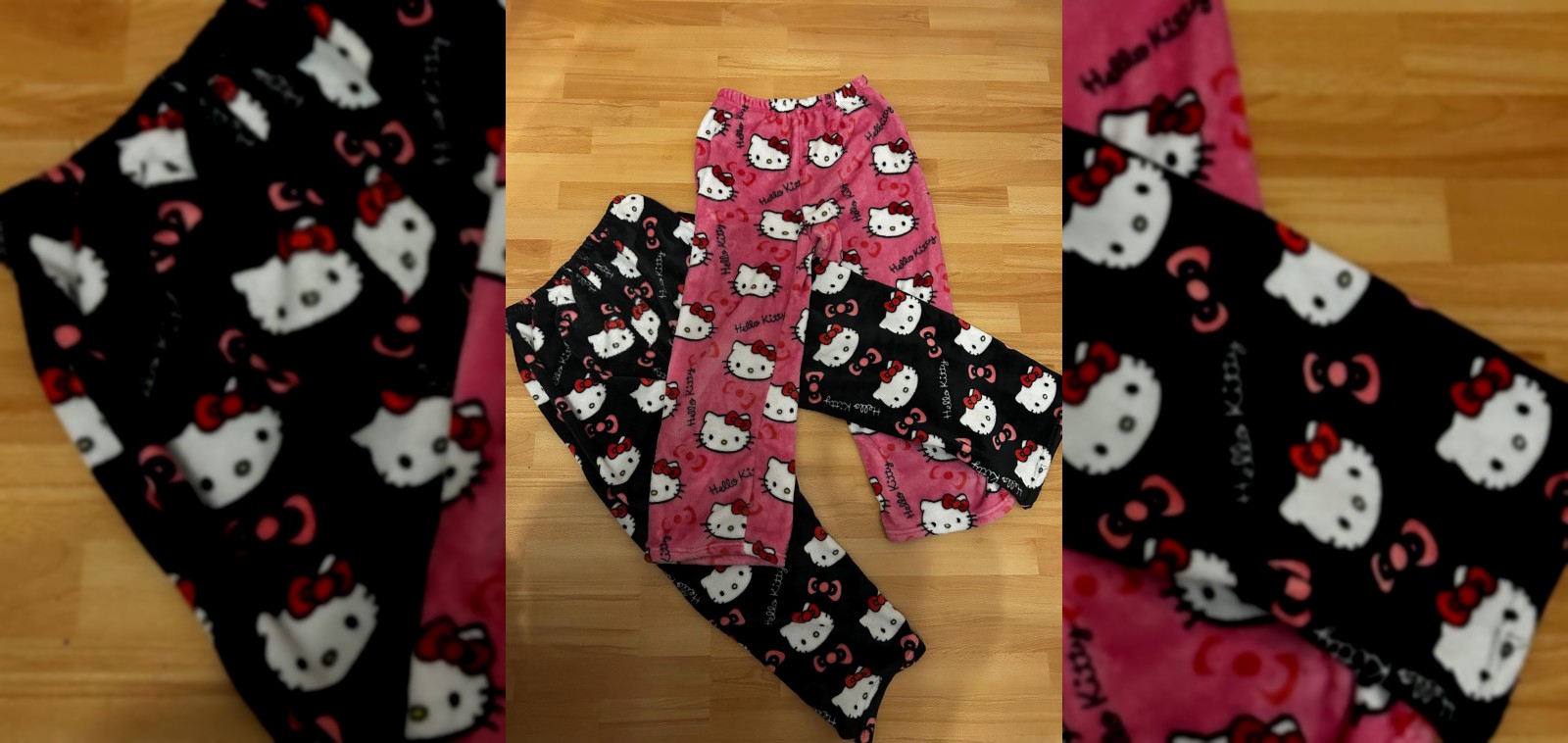
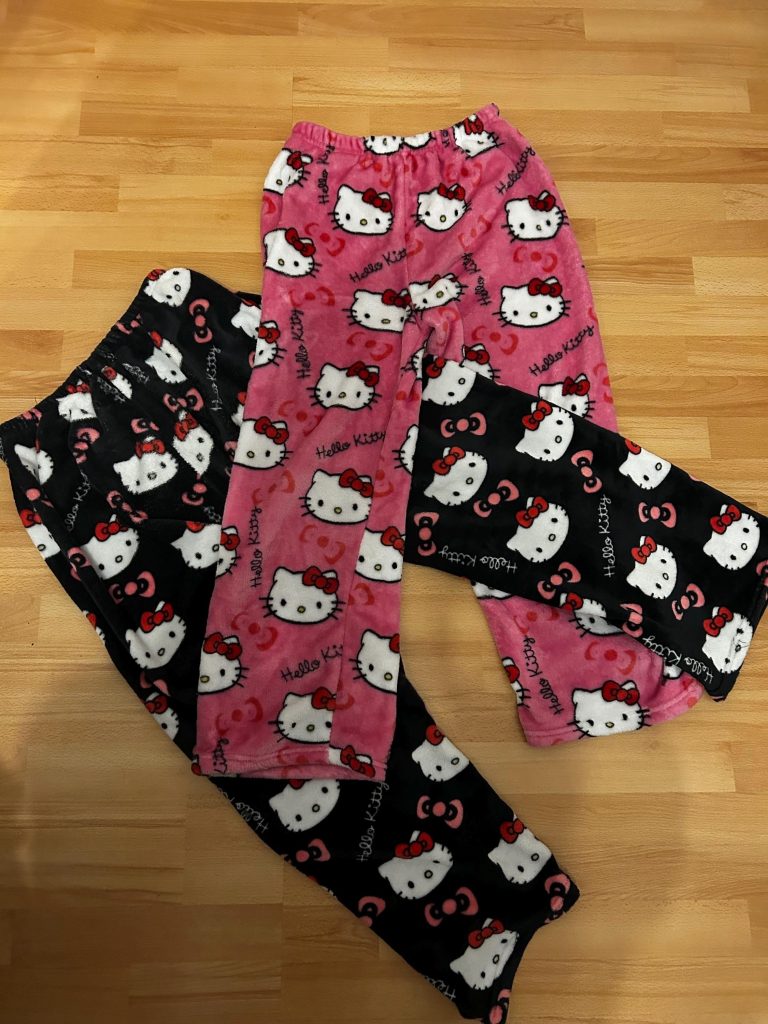
Of all the threats facing rave culture in 2026, one petitioner has decided the most urgent is fleece. A Change.org petition titled “Ban Hello Kitty Pants In The Rave” is asking the scene to draw a line at pajama bottoms, and this week it went viral after House Music US and EDM.com picked it up. The campaign to outlaw Hello Kitty pants at raves has become one of the most shared dance music stories of the month, which says a lot about how far the fuzzy pink trousers have spread across dancefloors.
What the Hello Kitty pants at raves petition actually says
The petition was launched by a user named Samantha Scott and is listed under the United Kingdom on Change.org. Its language is not subtle. It describes the rise of ravers showing up in Hello Kitty pajama pants as a “crisis” and argues that sleepwear has no place on a dancefloor. The core message, as quoted by EDM.com, is blunt: “Raves are not sleepovers. Pajama pants are for bed.”
Scott frames the whole thing as a matter of standards. Wearing mass produced sleepwear to a party, she argues, is not self expression but laziness, and she calls for a return to what she considers proper rave outfits. The petition does not name any specific event or promoter, and there is no indication that any venue or festival has considered a dress code of this kind. It is a statement of opinion aimed at the culture itself.
A movement with almost no signatures
Here is the detail that turns the story from outrage into comedy. According to EDM.com, which reported on the petition on September 3, it had collected only nine signatures since going live in March 2026. That is not a movement. It is a group chat.
The gap between the petition’s tone and its reach is exactly why it took off. Nobody is seriously worried that Hello Kitty pants are about to be confiscated at the gate. People shared it because it captured, in a single ridiculous demand, a real tension that has been building in rave fashion for years. The petition itself is at Change.org for anyone who wants to check the counter.
How pajama pants took over the dancefloor
The Hello Kitty fleece pant is not a random target. Over the last couple of years, Sanrio’s most famous character has moved from children’s lunchboxes to a full blown fashion trend, worn by celebrities and pushed by fast fashion retailers with dozens of variations in pink, black and pastel. The pajama version, soft, loose and cheap, ended up in the rotation of a generation of ravers who prioritize comfort over costume.
That shift is bigger than one print. Younger crowds at festivals and warehouse parties have embraced oversized tees, baggy jorts, cargo pants and, yes, pajama bottoms as their default look. For many of them, dressing down is the point. It is a refusal to perform for the camera and a practical answer to twelve hours on a concrete floor. The look reads as a rebellion against the hyper produced festival fashion of the 2010s, when every outfit was built for Instagram.
Kandi, furry boots and the eternal generational argument
The petition lands squarely on a generational fault line. Millennial ravers remember an era defined by kandi bracelets stacked to the elbow, furry boots, neon and elaborate handmade outfits. Effort was part of the ritual. Showing up in something you clearly worked on was a way of saying you took the party seriously.
Gen Z ravers, by and large, see it differently. Comfort is its own statement, and the idea that a party requires a uniform, even an unofficial one, feels like exactly the kind of gatekeeping the scene claims to reject. Rave culture has always talked about acceptance and freedom, and it is hard to square that with a petition telling people what they can and cannot wear.
Both sides have a point, which is why the argument never ends. Every scene eventually produces someone who thinks the newcomers are doing it wrong. Sometimes that someone writes a petition.
Why this story spread so fast
Rave fashion has quietly become one of the most reliable conversation starters in dance music. Earlier this month the industry debated whether smart glasses should be banned from nightclubs over privacy concerns, a much more serious issue with real consequences for venues. The Hello Kitty petition is the lighter cousin of that debate, but it taps into the same question: who gets to decide what belongs on a dancefloor?
It also arrives in a moment when rave culture is having a nostalgic streak. Collectors are turning old rave flyers into world records, and clubs are experimenting with formats like a rave inside a giant microwave. When the scene spends this much time looking back at how things used to be, a petition demanding a return to “traditional” rave outfits was always going to find an audience, even if that audience is mostly laughing.
The verdict from the dancefloor
Nine signatures is the answer. For all the noise online, ravers have voted with their feet, and their feet are in fuzzy pink pants. The petition will most likely fade the way most viral petitions do, and Hello Kitty will keep showing up at parties from Los Angeles to Manchester.
Still, the episode is a useful reminder that rave fashion is never just about clothes. It is about belonging, about who the scene is for, and about how each generation reshapes the culture it inherits. The kandi kids of 2008 were once the newcomers that older heads complained about. The pajama crowd of 2026 is simply next in line.
The full report on the petition is at EDM.com.