
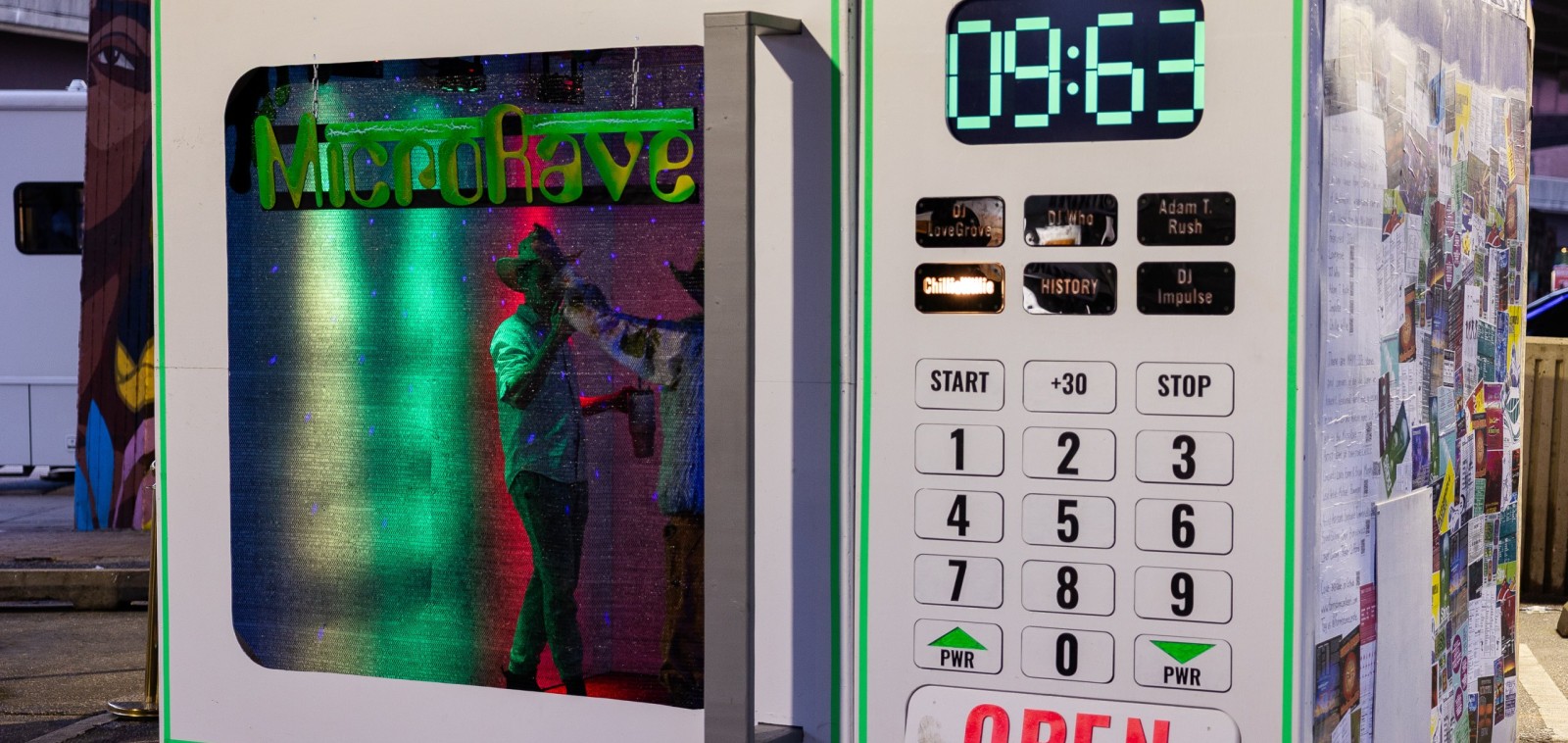
The strangest dancefloor of the American festival summer was twelve feet wide and had a countdown clock bolted to the front. MicroRave, a giant microwave with a working nightclub inside it, turned up at Daisy Chain Fields in Irvine, California on August 29, and festivalgoers queued in the Orange County sun for a turn to dance inside a kitchen appliance.
What the MicroRave actually is
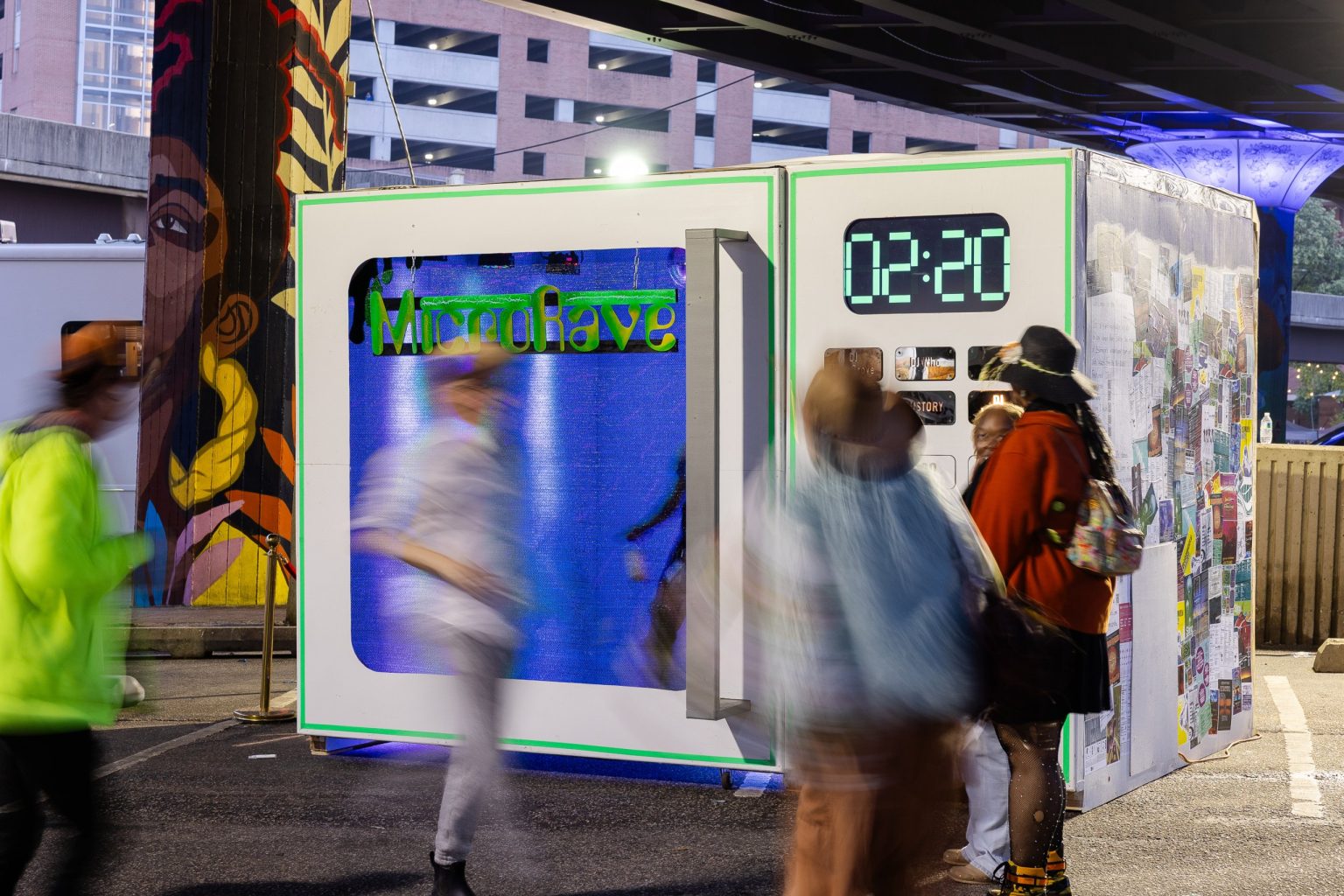
The piece is the work of Formstone Castle, a Baltimore collective run out of Upper Fells Point by lead artist Michael Bowman. By the studio’s own measurements the MicroRave is twelve feet wide, eight feet deep and eight feet tall, which makes it a very large microwave and a very small club.
Formstone Castle built it for Artscape 2026, Baltimore’s free public arts festival, where it ran across the weekend of May 23 and 24. The Baltimore Times called it one of the festival’s most talked about installations, a nostalgic dance space pulled straight from the city’s warehouse and club scene of the 1990s and 2000s.
How a turn inside the MicroRave worked
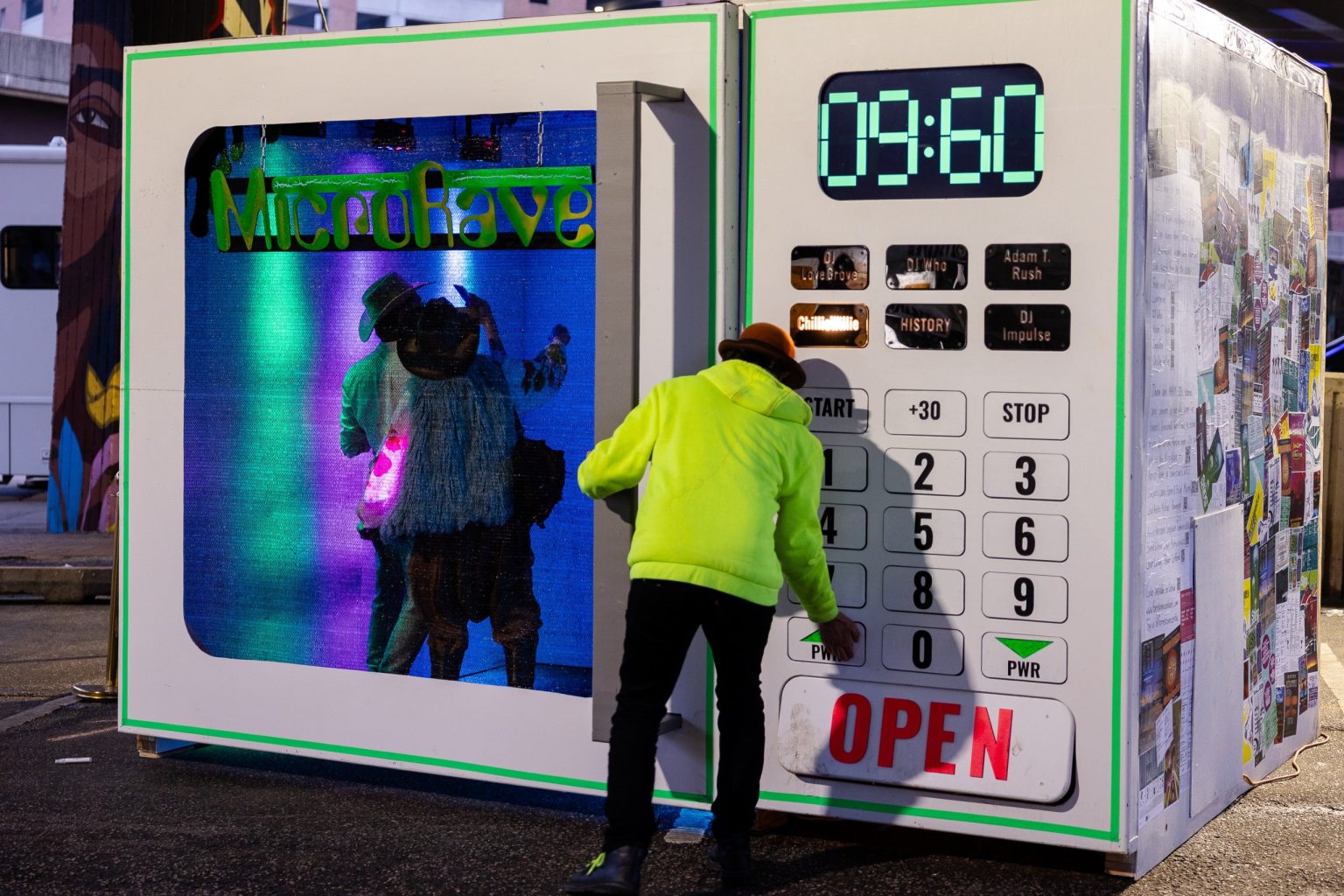
The ritual was the joke and the point. Groups queued like they were waiting on a guestlist, filed past velvet ropes, then hit a giant door release button. From there they used an oversized control panel to punch in a duration and pick a DJ, then pulled the door shut behind them.
Inside, the lights came up, the music started and a disco ball spun overhead so the floor read as a microwave turntable. Outside, a clock counted the seconds down in front of everybody still waiting. When it reached zero the piece announced itself with a loud DING, the door swung open, the music cut, and the next group went in.
The detail runs all the way through the build. The panel carries a full numeric keypad, START, STOP and a +30 button, and above it sit six lit selector plates naming the DJs on rotation: DJ LoveGrove, DJ Who, Adam T. Rush, Chillie Willie and DJ Impulse, plus one simply marked HISTORY.
A Baltimore club history lesson bolted to the outside
The sides and rear were covered in flyer style posters carrying information about the warehouse venues, the clubs, the DJs and the crowds that built Baltimore’s scene from 1990 through the 2000s. Bowman describes the piece as unapologetically Baltimore, a space designed to put several generations of the city in the same queue.
That flyer wall is the part house heads will recognise fastest. Paper flyers were the infrastructure of the rave era, and collectors still treat them as the primary record of what actually happened. One Italian collector’s rave flyer collection of 113,012 pieces now holds a Guinness World Record.
From Artscape to Olivia Rodrigo’s festival
Three months after Baltimore, the microwave was in Orange County. Daisy Chain Fields ran on August 29 at Orange County Great Park in Irvine, a one day charity festival founded by Olivia Rodrigo with an all women lineup across two stages that included Chappell Roan, Doechii, Mitski, Bikini Kill, The Breeders, Garbage and Santigold. Around 45,000 tickets were sold, and the event raised $20 million for ten charities after Melinda French Gates matched the total through Pivotal Ventures.
Nothing on that bill is dance music, which is exactly what makes the placement land. The only proper rave at Daisy Chain Fields was a boxed one, running a handful of people at a time on a timer, while 45,000 others watched rock and pop outside.
Why shrinking the club worked
Festival art has spent a decade getting bigger. Burning Man alone absorbs sculptures that take years and tonnes of steel to deliver, like the broken Eiffel Tower that landed on the playa this year.
The MicroRave went the other way. It compressed the club until scarcity did all the work: a queue, a door, a fixed run time and a room that holds almost nobody. Anyone who has stood outside a small venue knows the feeling being sold, and the countdown clock turns the wait into the show for everyone who is not inside yet.
Formstone Castle has form for this kind of scale trick in reverse. The studio built What Lies Beneath for Light City in 2018, a 120 foot by 40 foot screen carrying more than 64,000 LEDs just below the surface of Baltimore’s Inner Harbor, and it distributed more than 150 plaster cicada sculptures across Maryland for Cicada Parade-a in 2021.
Where the microwave goes next has not been announced. Formstone Castle lists it simply as a 2026 festival piece, which leaves a lot of calendar open.