

Apple Music AI labels are officially on the way. The streaming service has confirmed it will begin marking tracks that were materially generated using artificial intelligence with a visible “Made With AI” tag later this year, a plan first reported by Billboard after Apple emailed its industry partners on Thursday 20 August 2026.
For electronic music the timing matters more than the feature itself. Apple is the latest major platform to move on AI disclosure during a month in which Beatport banned fully AI-generated tracks outright, Spotify began badging AI artist identities, and an analysis of more than a million July releases found AI involvement in almost 40 percent of them. The industry question has shifted. It is no longer whether AI music is arriving. It is who has to admit to it.
What the Made With AI label actually does
The label is a disclosure layer, not a filter. Apple Music introduced AI Transparency Tags back in March, allowing content providers to flag when AI was used to create a material portion of a track, a composition, artwork or a music video. Those tags have been invisible to listeners until now. The Made With AI badge is what surfaces them inside the app.

“As we implement ‘Made With AI’ labels, content providers will be important partners,” Apple Music said in its statement. “They are best positioned to know how their content was created, and the AI Transparency Tags that should be used.”
That sentence carries the weight of the entire policy. Apple is not detecting anything. It is publishing what record labels and distributors choose to declare about their own releases.
The numbers do not agree, and that is the story
Apple Music executive Oliver Schusser told Billboard‘s On the Record podcast in April that “more than a third” of the music submitted to the platform each month is “100% AI”, while actual listening to it sits “below 0.5%”. Deezer, which has published the most consistent tracking of this, reported last month that roughly half of its daily uploads, around 90,000 tracks, were AI-generated. In May the same figure was 44 percent.
Then there is SubmitHub. The playlist and blog submission service ran more than a million July 2026 releases through its detection tool, SH Labs, and found some form of AI involvement in 38.5 percent of them. Of that total, 23.2 percent were fully AI-generated and a further 15.3 percent contained AI-generated audio that had been modified or processed by a human.
These three figures measure different things: submissions to one store, uploads to another, and detector analysis of global releases. They do not need to match to point in the same direction. The more useful number is what happened when SubmitHub went back to the artists it had flagged. Asked directly whether they had used AI tools, 31 percent said they had not.
“I think the path forward for AI music is disclosure,” SubmitHub founder Jason Grishkoff said. “People should be able to decide for themselves whether they want to engage with AI-generated music. Our job is to give them enough information to make that choice.”
Beatport skipped the label and banned the tracks
While Apple built a badge, the store that actually matters to working DJs closed the door. On 12 August, Beatport updated its content guidelines to reject any track that is fully or majority AI-generated. Releases made with AI assistance are still accepted provided the finished record remains majority human made, and those get tagged during ingestion so the curation team can see what it is reviewing.
The enforcement comes from an expanded partnership with Beatdapp, a firm that specialises in streaming fraud detection. Flagged tracks are blocked at upload and rightsholders are notified. Beatdapp co-founder and co-CEO Andrew Batey said the deal would bring greater transparency to generative AI while protecting human creativity.
Beatport pointed to its own community survey to justify the decision. Sixty percent of respondents said they would not play AI-generated tracks, 77 percent cited a firm preference for supporting human creators, and only 8 percent said they were open to playing AI music. A further 13 percent said they would consider it if artists and labels were properly compensated.
“Beatport exists to serve DJs and empower artists and labels,” said Beatport CEO Matt Gralen. “While new production techniques have driven electronic music forward since the beginning, there is a difference between a tool that assists human creation and a system that replaces it entirely. Beatport is built on the former.”
Why Apple Music AI labels matter for house and techno
Electronic music is the genre most exposed to this. Loop based production, four to the floor structures and instrumental arrangements are exactly what generative models handle best, which is why house, tech house and lo fi variants dominate the AI uploads platforms keep reporting. A vocal ballad is hard to fake convincingly. A functional eight minute groove is not.
That creates a specific problem for the people who buy music for a living. DJs dig through release pages and charts on the assumption that a track came from a producer they can book, follow or remix. Genre charts flooded with synthetic uploads make discovery slower and push real records further down the page. Beatport’s ban protects the chart. Apple’s label protects the listener. Neither one refunds a producer whose release got buried under 400 machine made tracks that week.
There is also a legal layer running underneath all of this. The question of what generative models were trained on remains contested, and the courts have started weighing in, as we covered when a US ruling landed on Suno and its use of copyrighted recordings. Disclosure at the shop front does not settle what happened at the training stage.
Spotify, TIDAL and the rest of the disclosure wave
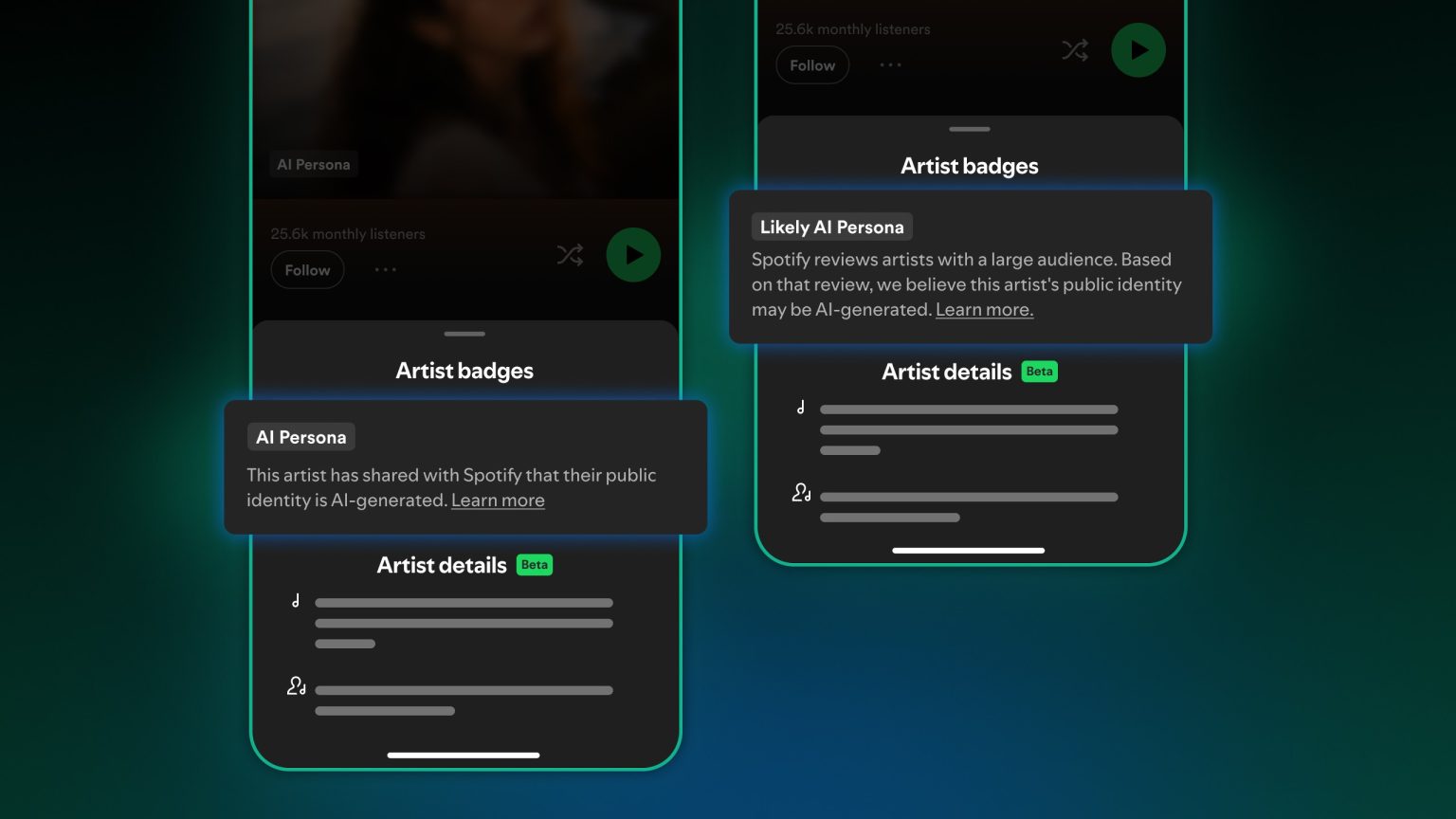
Apple is joining a line that formed months ago. On 11 August, Spotify announced an AI Persona badge that will start appearing on artist profiles from mid September, applied both through artist self disclosure and through Spotify’s own review of profiles that appear to present photorealistic AI-generated identities. Music from those profiles will be excluded from editorial and algorithmic recommendations by default.
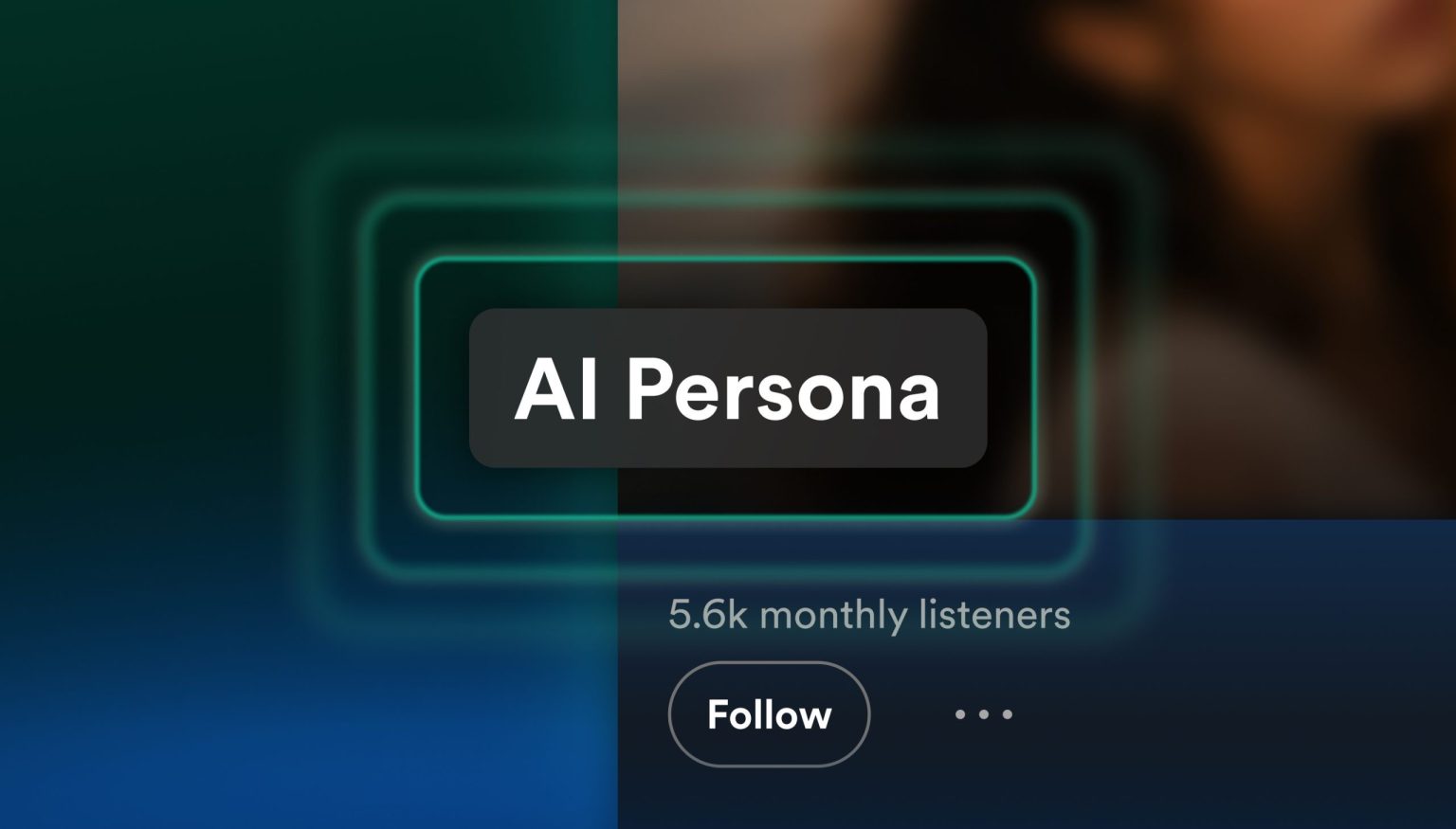
Spotify was careful about the scope. “This badge is about the artist’s public identity, not about how the music was made,” the company wrote. That is a meaningfully different target from Apple’s, which addresses the recording rather than the persona behind it. Read together, the two policies cover different halves of the same problem.
TIDAL moved in June by excluding AI-generated music from royalty payments. Bandcamp banned AI music from its platform entirely earlier this year. Deezer has been demonetising AI streams since January, when it said it had cut payouts on up to 85 percent of them. Spotify removed 75 million AI spam tracks in a fraud crackdown last September.
The hole in every one of these policies
Self disclosure is the weak point, and the SubmitHub follow up quantified it. Nearly a third of artists whose work was flagged as containing AI told the platform they had not used it. Whether those are lies, misunderstandings of what counts as AI, or false positives from the detector, the result is the same: a labelling system built on voluntary declarations will under report.
Beatport’s approach is the outlier because it pairs policy with detection rather than trusting the paperwork. That is also the harder and more expensive route, which is why a specialist store with a defined community could take it and a platform serving hundreds of millions of listeners has not. The tools that shaped this music have always been physical objects that somebody had to learn, from the synthesizers that set auction records to a pair of turntables. The argument now is about where a tool stops being a tool.
What happens next
Apple has not given an exact launch date beyond “later this year”, and it has not said what happens to a provider that tags nothing. Spotify’s badges begin appearing in mid September, which will be the first large scale public test of whether listeners actually change behaviour when they can see the label. A coalition of recorded music stakeholders has separately pushed for a standard that distinguishes fully AI-generated works from AI-assisted ones, and Apple’s provider led model is close to that shape.
For now the split is clear. Streaming platforms are choosing transparency and letting listeners decide. The electronic music store where DJs actually spend money chose exclusion. Which of those two approaches becomes the default will say a lot about who the next decade of dance music is built for.
Apple Music AI labels FAQ
When do Apple Music AI labels launch?
Apple has said the Made With AI labels will roll out “later this year”. No specific date has been confirmed.
Who decides whether a track gets the Made With AI label?
Content providers do, meaning record labels and distributors. They apply Apple’s AI Transparency Tags at delivery, and Apple surfaces those declarations to listeners. Apple is not running its own detection.
Is Apple Music banning AI-generated music?
No. Apple is labelling it, not removing it. Beatport is the platform that has banned fully and majority AI-generated tracks, while Bandcamp banned AI music outright earlier in 2026.
How much new music is actually made with AI?
SubmitHub found AI involvement in 38.5 percent of the million plus releases it analysed from July 2026, with 23.2 percent fully AI-generated. Deezer reported that around half of its daily uploads are AI-generated. Apple says more than a third of monthly submissions are entirely AI, though listening to that material stays below 0.5 percent.
Can AI-assisted tracks still chart on Beatport?
Yes, provided the finished record remains majority human made. Those releases are tagged during ingestion. Tracks that are fully or mostly AI-generated are rejected and rightsholders are notified.
Sources: Billboard, DJ Mag, Mixmag, Variety, Beatportal and the Spotify Newsroom.