


The Suno copyright ruling handed down in Munich is the most consequential legal decision the AI music business has faced, and it landed on the industry over the weekend. On July 31, the Munich Regional Court found that Suno, the American platform that turns text prompts into finished songs, had no right to train its models on works represented by GEMA, the German collecting society. The court ordered Suno to disclose the revenue tied to the infringement so damages can be calculated, and it granted GEMA injunctive relief. GEMA represents roughly 95,000 rightsholders in Germany and more than two million worldwide.

What the Suno copyright ruling actually decided
The judgment, case number 42 O 763/25, is the first major European decision to hold that training a model on protected music without a license can infringe copyright even when the training servers sit outside the European Union. Reuters first reported the outcome, and the court published its own summary the same day.
Three findings do the heavy lifting. First, the court held that the works were memorized inside certain versions of Suno’s models, which were stored on servers in Germany, and that this memorization is itself a reproduction under German copyright law. Second, it held that the outputs generated in Germany reproduced recognizable original elements. Third, it placed responsibility on Suno rather than on the people typing the prompts, reasoning that Suno trained the models, chose the data and designed the architecture, so the model rather than the prompt determined what came out.
“This is a verdict of global significance,” GEMA chief executive Tobias Holzmueller told Reuters.

The songs at the center of the case
GEMA built its case around six well known compositions rather than a sprawling catalog claim, and it argued visually. In court it played side by side comparisons of Suno outputs and the originals, pointing to matching melody, harmony and rhythm. Reporting on which titles were used varies slightly between outlets: DJ Mag cites ‘Rasputin’, ‘Daddy Cool’ and ‘Mambo No. 5’, while The Next Web names ‘Forever Young’, ‘Mambo No. 5’ and ‘Daddy Cool’. All accounts agree the claim covered six works, and that the lyrics were not at issue, which separates this case from GEMA’s earlier action against OpenAI over German song lyrics.
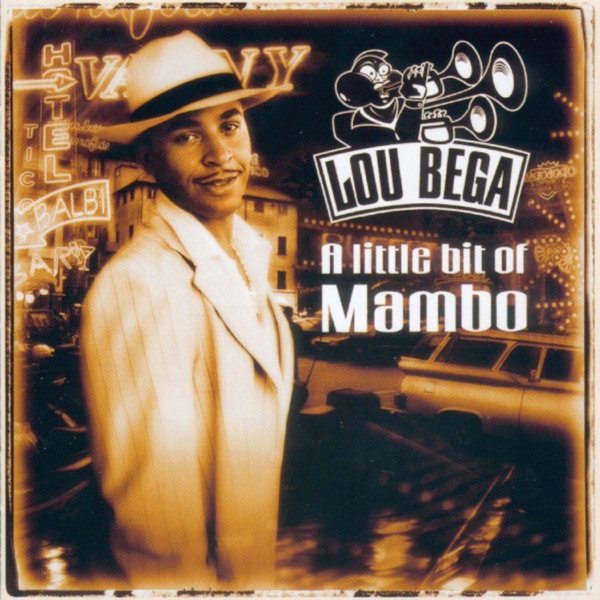
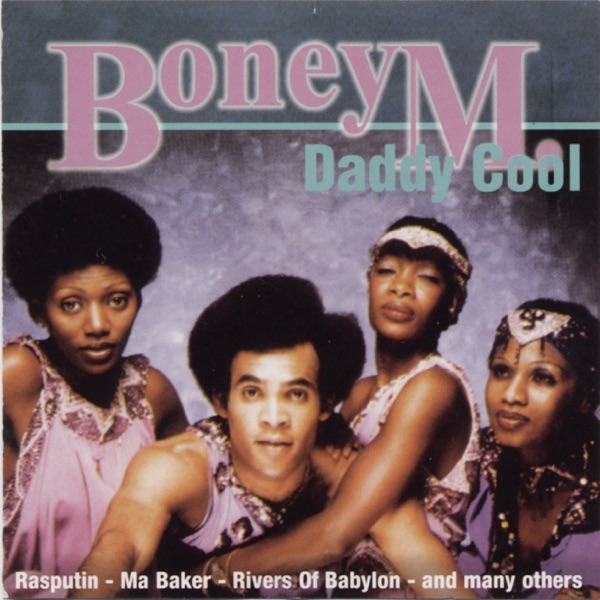
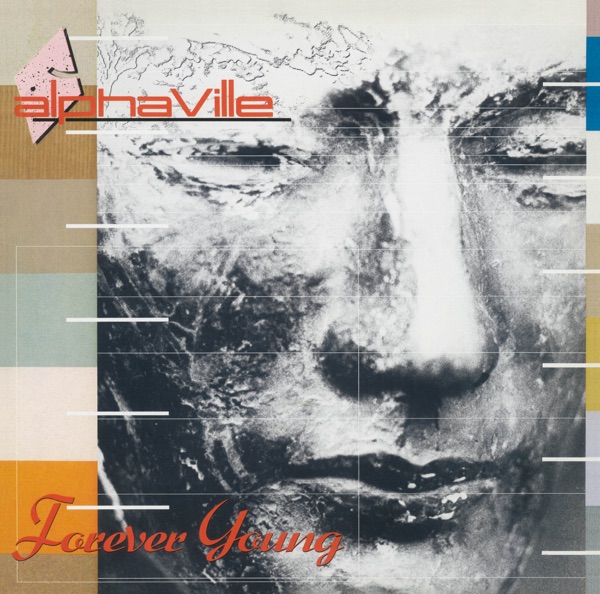
It was undisputed in the proceedings that the six recordings sat in Suno’s training data, and that the company used stream ripping to pull them from YouTube, working around the platform’s technical protection measure in the process. That admission removed the factual argument AI firms usually lead with.
Offshore training was no safe harbor
The most far reaching part of the judgment is jurisdictional. Suno argued that its training happened in the United States, that American fair use applied, and that a German court had no business assessing it. The Munich judges disagreed on both counts. They accepted jurisdiction over the American conduct under the German Collecting Societies Act, a route open to collecting societies but not to individual labels or publishers, and then ran a full fair use analysis themselves.
They concluded fair use did not apply, because simple prompts produced outputs substantially similar to the originals. That distinguishes the case from the two American decisions AI developers lean on most, Bartz v. Anthropic and Kadrey v. Meta, where the outputs did not closely resemble the training material. The court also indicated that complying with the transparency duties in the EU AI Act does not by itself release a provider from copyright liability.
Suno’s response and the road to appeal
Suno is not conceding. “We disagree with today’s ruling, which rests on a fundamental mischaracterization of how Suno’s technology works, how it is used and how U.S. law applies, and are evaluating all available options, including an appeal,” the company said in a statement to Music Business Worldwide.
Two caveats matter. The judgment is a first instance decision and is not final. It can be appealed, and GEMA’s parallel win against OpenAI is already before the Munich Court of Appeals, so the doctrine underneath both rulings has not been tested at the appellate level. German courts are also not unanimous: the Hamburg Court of Appeals took a more permissive view of training datasets in December 2025. A Court of Justice of the European Union opinion in the Like Company case is expected in September 2026 and could reshape the picture again.
The pressure on Suno is not only European. The company was valued at about $5.4 billion after a funding round earlier this year, and it is defending copyright claims from major labels in the United States. Separately, a class action filed on July 24 in Massachusetts alleges a data breach exposing information tied to roughly 55.3 million users, which the complaint says Suno knew about in November 2025 but did not disclose. Suno has described that incident as a security issue that was quickly contained.
Why it matters for electronic music
Dance music has been the genre most exposed to generative tools, because loop based production, short arrangements and instrumental beds are exactly what these systems imitate best. Producers have watched AI acts collect real streaming income while the legal question stayed open. This ruling closes part of it, at least in one large European market, by saying the licensing bill comes before the product, not after it.
GEMA is running licensing alongside litigation. On July 23 it launched PLAI by GEMA, a licensed dataset of roughly 178,000 sound files across more than 60 genres, aimed at AI developers who want a legal training source. The message is blunt: pay for the catalog or stay out of it. Artists have been making a version of that argument for a while, including Skrillex, who used his first interview in a decade to take aim at AI music, and the debate now runs straight through the tools producers use daily, from generative plugins to the AI assistant built into FL Studio 2026.
Frequently asked questions
What did the Munich court decide in the Suno copyright ruling?
It found that Suno reproduced GEMA represented works during training, inside its models and in its outputs, without a license. The court granted injunctive relief, ordered Suno to disclose related revenue, and confirmed GEMA’s entitlement to damages, with the amount still to be set.
Is the Suno copyright ruling final?
No. It is a first instance judgment and Suno has said it is weighing an appeal. Under German law, however, a first instance judgment can be enforced while an appeal is pending.
Does the ruling apply outside Germany?
Directly, no. It binds Suno in Germany. Its wider weight comes from the reasoning: the court reached conduct that happened in the United States and rejected fair use, which lawyers expect to influence pending European cases.
What happens to Suno users in Europe?
Nothing has changed for account holders yet. The court held Suno rather than its users liable, and the company has not announced any change to its European service.
For four years the AI music industry built first and worried about licenses later. Munich has now put a number on that strategy, or at least demanded the paperwork that will produce one. Whether the appeal courts agree is the next question, and the answer will set the price of every model trained on somebody else’s catalog. The court published its own summary of the decision in its official press release.