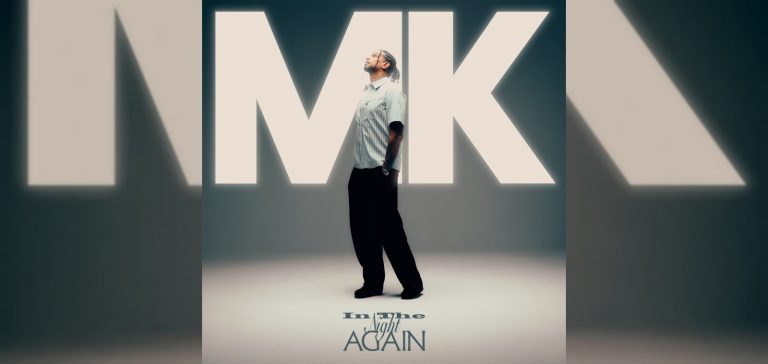

Charlotte de Witte has released Azadi, a three track EP on her own KNTXT label in which every vocal is sung by NAVA, an AI singer built to stand in for Iranian women who are barred from performing in public. The Charlotte de Witte Azadi EP landed this week with all proceeds going to the women’s rights organization Femena, and it puts one of techno’s biggest names at the center of two arguments at once: what dance music can say about politics, and whether an artificial voice belongs on a record at all.

What is on the Charlotte de Witte Azadi EP
The release carries three originals, each credited to Charlotte de Witte feat. NAVA. The titles are in Farsi and spell out the theme: “Azadi” means freedom, “Omid” means hope, and the third track is “Tales of the Desert”.
- Azadi: the title track, built on fast percussion and a dark acid line, with NAVA’s voice soaring through the breakdowns. De Witte has already been playing it in her sets.
- Omid: jittery bass, sharp stabs and a two note riff, with NAVA delivering layered spoken word in Farsi.
- Tales of the Desert: the most atmospheric of the three, almost entirely breakdown, with slow chords, bursts of acid and high vocal lines in place of a conventional drop.
KNTXT’s Bandcamp page dates the digital release to November 5, and a black 12 inch vinyl edition is listed for preorder. Several weekly roundups featured it in their New Music Friday coverage on November 6. De Witte first teased the project on October 20 with a snippet of “Tales of the Desert”, posted jointly with NAVA’s Instagram account alongside an AI generated video of the two figures on salt flats.

Who is NAVA?
NAVA was created in 2025 by Farbod Mehr, an artist born in Iran and based in London who trained in architecture at Central Saint Martins and runs the AI visual studio V Generate. Her face draws on classical Iranian portraiture, including women of the Qajar era, and her songs rework Persian folk and pop material. She broke through in early 2026 with a version of “Az Khoone Javanan e Vatan”, a revolutionary song written after Iran’s 1906 Constitutional Revolution. According to The National, that clip passed 13 million views on Instagram.
The point of the character is political. Iranian law bars women from singing solo in front of mixed audiences, and singers who defy it face consequences: Parastoo Ahmadi had a judicial case opened against her after she streamed a solo concert online in late 2024. A synthetic singer, the thinking goes, can say what a real woman inside the country cannot without risking arrest.

What Charlotte de Witte and Farbod Mehr said
In the release notes on Bandcamp, de Witte explained that a friend showed her one of NAVA’s posts and she was moved by “an expression of hope that sacrifice will lead to a better future,” so she reached out. She framed the record directly around the ban:
“NAVA represents Iranian women banned from public performance. Unlike others, NAVA can not get arrested for using her voice. These tracks are, in their own way, a small act of resistance.”
Charlotte de Witte, via the official Azadi EP release page
Mehr pointed to an old Persian verse at the core of the project, “the darkest night must end in dawn,” and said that working with de Witte “gave that heritage a pulse.”
Why the release matters now
De Witte arrives at this record at a career peak. She was just voted No. 6 overall in the DJ Mag Top 100 DJs, three places higher than last year, and named the world’s top techno DJ in that poll for a seventh time. Her autumn has included a debut at the Starlight Festival at the Pyramids of Giza. When an artist of that size puts an AI vocalist on a full release, the rest of the scene takes notice.
The timing also collides with tightening store rules. Since August 2026, Beatport has refused tracks that are fully or mostly AI generated and labels AI assisted music, while Bandcamp bans music made entirely by AI. Azadi is plainly human produced with a synthetic voice on top, which places it in the assisted category, though neither KNTXT nor the stores have publicly addressed how those policies apply here. The Association for Electronic Music has separately called for consent, credit and compensation for creators whose work trains AI systems.
How fans and critics reacted
The response under the original teaser and across techno media has split cleanly. Supporters argue NAVA can carry lyrics and language that would put a real Iranian singer in danger, and that the record brings Persian poetry to dance floors that rarely hear it. Critics ask why a paid human vocalist, perhaps an Iranian woman in the diaspora, was not hired instead, at a moment when session singers and topliners already feel squeezed by AI tools. Both camps tend to agree that the charity angle is sincere; the disagreement is about the precedent.
What happens next
The vinyl pressing is the next milestone for the release, and de Witte is expected to keep the title track in rotation through her remaining 2026 dates, which wrap up with EDC Thailand in December. How Beatport handles the EP, and whether other major names follow her lead with AI voices, will be the more telling story.
Azadi is a small record with a large argument attached. Whatever side listeners take, de Witte has made sure the conversation about AI in techno now includes the question of who gets to be heard.
FAQ
When was the Charlotte de Witte Azadi EP released?
KNTXT lists the digital release date as November 5, 2026. A black 12 inch vinyl edition is available for preorder.
Who sings on Azadi?
All vocals are by NAVA, an AI generated Persian singer created by London based artist Farbod Mehr. No human vocalist appears on the EP.
Where does the money from Azadi go?
All proceeds go to Femena, an organization that supports women human rights defenders and feminist movements in Iran, the wider SWANA region and Asia.
What do the track titles mean?
“Azadi” means freedom and “Omid” means hope in Farsi. The third track is “Tales of the Desert”.